

Basketball player development isn’t just about reps in the gym. Trey Drechsel walked on at a D2 school with about a hundred kids in his graduating class — no scholarship, no recruiting buzz. Seven years of pro basketball later, his journey is proof that real basketball player development starts between the ears. In this episode, host Mitchell Kirsch sits down with Trey to break down the mental and physical systems that took him from a small-town kid to a 7-year overseas pro.
The Shooting Slump That Redefined His Basketball Player Development
At Western Washington, Trey was shooting mid-40s from three — first-team all-league, wildly consistent. After transferring to Grand Canyon, it fell apart. He finished the season at 15% from three. His fix? Two extra workouts a day. Sleeping in the team snack room. None of it worked. “I was treating the mental side as unimportant,” he says. That slump became the turning point in his basketball player development — the moment he realized physical effort alone couldn’t solve a mental problem. Every coach working with athletes needs to hear this story.
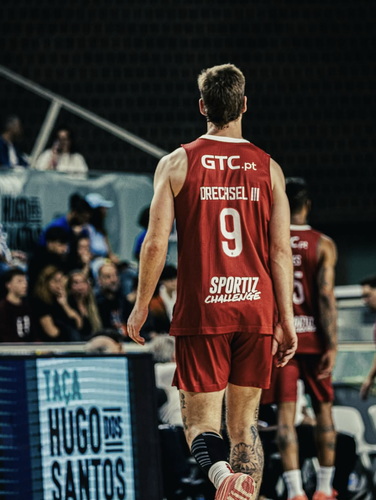
The 10-Minute Mental Warmup for Basketball Player Development
Trey journals for 10 minutes every morning — not gratitudes, not to-do lists, but expanding on the big concepts he’s processing. On game days, he writes three personal execution items and three team goals. “It’s the same idea as your warmup before practice,” he says. “But for your headspace.” Over a nine-month season, that daily 10-minute commitment adds up to a massive investment in basketball player development — the kind coaches should be teaching their athletes. If you’re serious about basketball player development, start with 10 minutes of journaling before anything else.
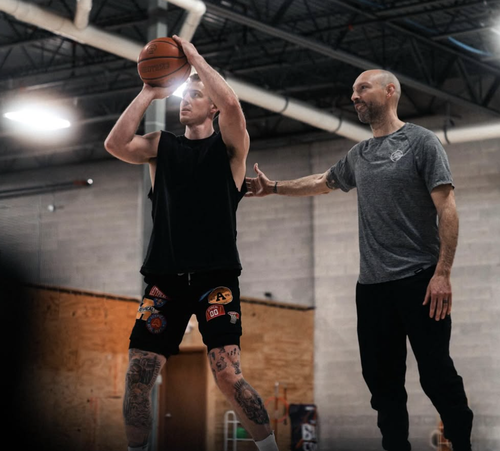
Physical Systems That Keep a Pro Basketball Player on the Court
After knee surgery in Lithuania revealed three meniscus tears and cartilage floating everywhere, his surgeon told him: “Your boat was sinking. You were just incredible at patching up the holes.” Trey identified himself as a quad-dominant mover by studying film and comparing his deceleration to players like Luka Doncic. He reverse-engineered his entire warmup — glute activation, posterior chain work, core trunk stability — arriving 90 minutes before every practice. That level of basketball player development and body awareness is what separates guys who last from guys who don’t. Coaches investing in basketball player development should be teaching their athletes this kind of body awareness from day one.
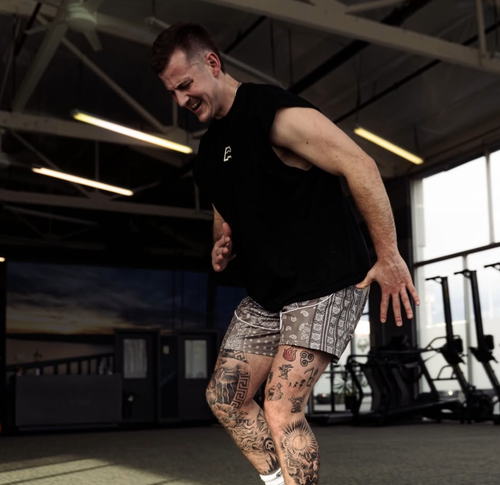
Atypical: Basketball Player Development Beyond the Court
Trey’s brand, Atypical, is built on one idea: basketball is the sandbox of life, not life itself. He believes real basketball player development means using every experience — slumps, injuries, new environments — as fuel for growth, not just on the court but as a person. That mindset is the missing piece in most basketball player development programs. It’s the kind of holistic approach that the best training programs and coaches are building into their systems.
Basketball player development takes focus. If you’re a coach running a facility and want to spend less time on scheduling and payments so you can focus on developing athletes, book a demo with CoachIQ. We work with over a thousand sports coaches building better athlete management systems every day.
Follow Trey Drechsel
Instagram: @treydrechsel
YouTube: @TreyDrechsel5
Brand: Atypical — sign up for his newsletter via Linktree on Instagram.
Full Episode Transcript
The following is a lightly edited transcript of the full basketball player development conversation with Trey Drechsel.
Click to read the full transcript
Mitch: Welcome back to the podcast. I’m your host Mitchell Kirsch and I’m excited to announce Trey Drechsel. He is someone I consider a friend, overseas hooper, owner of the brand Atypical. You’ve probably seen him on social media. Trey, welcome to the podcast.
Trey: Mitch, it’s good that you have me. Super excited. I think I was honored that you asked me to come on just because you’re such a high-level thinker. In my mind, one of the guys pushing the game forward the most in the basketball development, holistic development approach to basketball. I think me and you are going to go back and forth on some interesting things. I’m very excited for this conversation. And you’re already getting in the groove. Just before we actually started the podcast, you’re talking about how you are going to be hosting two podcasts of your own. So you’re getting ready to host.
Mitch: Yeah, my setup’s not fully built out now. This is my basement. But in the coming days, hopefully it’ll look a little more professional. I’ll get a headset too and we’ll really look like twins.
Trey: I love it. I love it.
Mitch: Yeah, we got the shirt on. Just for a little bit of the backstory before we get into the meat of potatoes. This past summer, I run a camp out in Bainbridge, Washington, which is close by to Trey’s hometown. And we got connected and we’re able to do a few workouts out there. And for me, the reason I love the camp out there, the people are amazing. Like you said, high level thinkers, high level players like yourself. To see what basketball and the tool of basketball that you use to propel your life forward was something I really appreciated. And I think the message that you put out through your YouTube series, through your newsletters, is something that helps hoopers, coaches, parents. It helps everybody related to basketball. So before we get into that, I just want to say thank you for your contributions to the basketball world because I think what you’re doing is amazing.
Trey: Yeah, no, I really appreciate that. I think when I came to and worked with you last summer was one of my highlights of the summer. Just because the way that Elevate and you approach development not just for basketball players, but as people in general, it really resonates with me because it’s the whole person. It’s the understanding the why behind all the things that we are doing. For me that camp was just even though we had, I think, four pros there, we had a really selected top group and then the rest was mainly high school kids. I was getting so much out of even what you were working with the high school kids. I was just like there’s so much high level thinking there and so much reflection on my past training habits, my past training ideas and the concepts that honestly, I held pretty dearly. It was just kind of like a bit of a wake-up call inside in another way of thinking about it.
Mitch: Yeah, the people there were incredible too. I mean, Will Ferris. You can’t beat Will Ferris.
Trey: He’s been on the podcast. His episode will be released soon. He’s crushing it. They just won a really big tournament, Team USA 3-on-3.
Mitch: Yeah, that’s sweet. And I mean, the coolest part too, talking about three on three, you guys introduced me to three on three. Like I had seen three on three FIBA basketball in Europe, but it was kind of like, oh, those guys are doing that thing over there. Okay, whatever. You know, you can not look down on them, but it’s just like, oh, they probably couldn’t hoop with us. And you go play three on three and it’s like, wait, I don’t know if I can hoop with them.
Trey: It’s a different game. It is fun though. And the people we had at that camp were former USA 3×3 players. These coaches and with the nature of that game being so different to five on five but yet there’s so many similarities. You can get busted pretty quickly from guys you feel like just one-on-one, hey I’m a better player, but the reason I love three on three is the development model. I think you get so many touches, you get so many opportunities to make decisions, a little bit more space to work with.
Mitch: Which ties into my first question for you. Is three on three to five on five different games of basketball? US basketball to overseas basketball, I think there are also some differences there. I would love for you to talk about your journey to playing pro. You started off as a Division II walk-on and have built yourself up into a very high level overseas player. What did it take to get to the point you’re at now?
Trey: That’s a really good question. So when I think of my journey, if you were going to break down to what it took, I think the two biggest things that allowed me to develop outsized to where people thought I would get to was adaptability and this constant want and hunger to learn and improve. I think those are the two things that if you were like, oh, what’s your superpower? Comparing to other people in my field, other athletes that have had similar journeys, those are the two things. Adaptability for me is the ability to come into an entirely new environment or situation and figure out how to provide value.
Trey: And for me, some of that was intrinsic. It was just natural, but some of it was out of survival. And so I think back to these moments that every time I entered a new environment, when you’re playing overseas, each year is a new team most of the time. And so you’re just thrown in these new environments and you better figure it out and find your role and figure out how you can produce or you might be on the next flight out of there.
Trey: When I think back to college, I came from a really small high school. There was only one college basketball player before me. He’s actually, he was my roommate in college. One year above me, but there was never a Division I basketball player. We had about a hundred kids in our grade. College basketball is kind of a pipe dream and I was a baseball player. So I just loved basketball. Had a growth spurt my senior year, but I still remember when I got to campus my freshman year and I’m starting to train with the team. I’m wide eyed. That first three weeks of college basketball, I was like, OK, I’m either going to be really bad and never figure this out. Or maybe if I start just watching the best players on my team, maybe I’m going to find the way they find solutions and I’m going to carve out a role.
Trey: I’ve always been very driven. And I remember after three weeks, we had this senior, or he was a junior point guard, Ricardo Maxwell. This is one of the craziest characters. This is like my dog now. And he just came up to me. He’s from Cincinnati. I’m from Woodinville, Washington, very different upbringings. And he just looked at me. He’s like, bro, you just got to hoop. You just got to hoop. You just got to believe in yourself. And then I was like, oh, maybe I am good enough. And then the things I was seeing, I started implementing them with some gusto and confidence. But that’s that adaptability. It’s fighting the imposter syndrome. It’s fighting, you know, I don’t know what coach is talking about. I need to figure them out. It’s connecting the puzzle pieces.
Trey: And when it comes to overseas, that was multiplied times a thousand because half the time the concepts they’re saying, you kind of understand them but it’s in broken English. Some of them are nuanced and prioritized different compared to the US. You want to pick and roll in the US, a lot of times it’s like how can you get down a hill to the rim. You’re not necessarily breaking the paint to create for others, at least at the college level where I was playing. I didn’t have that wherewithal. So when I got to Europe and I was getting pick and rolls and just running into the help side every time, it’s like all right, you got to figure this out. We got to make a lot more hockey assists, hit the short roll, stuff like that.
Trey: I am rambling a little bit but it was a big question and there’s so much to the breakdown, especially the transition from college to overseas, the transition from Division II to Division I. Then I think that the thread that pushes that through is adaptability and hunger to learn and grow from the experiences rather than kind of shrink to the habits and the trains of thought that you had before. And I think the common adage is what got you here might not get you there. I just kind of tried to embody that throughout my whole career.
Mitch: Yeah, no, I think that’s beautifully said and beautifully executed. In the short amount of time I was with you in Washington, you’ve played pro — what year are you on, eight, seven or eight?
Trey: Seven.
Mitch: Seven. All right. And not once was there an ego of like, all right, I already know what this is about. Where you get most people who have played basketball, you get high schoolers who feel like they’re good varsity players, they sometimes have bigger egos than often the guys that have played pro for many years. And that’s something I noticed with the NBA guys, very little ego, curiosity to learn, and like you said, that adaptability. And from what I’ve seen in your content is you’ve changed a lot or you’ve been open to different ways of training and you also change your training based off where you are — either offseason, in season, towards playoff time. Can you talk about what it takes to physically prepare for what your job is?
Trey: That is an incredible question. So I’ll just add a little backstory so I have a little bit of authority to speak on it. I don’t have the degrees in physical science and things like this, but my expertise comes from years and years of problem solving my own body. And then learning from really good people — high level strength coaches, high level communicators and high level requirements from both myself and the strength coaches.
Trey: And I recently had a knee surgery about six, seven weeks ago. And it was supposed to be a minor knee surgery. And I had been dealing with this knee for a while. When I got to Lithuania where I was playing this year, it just accelerated. All the symptoms accelerated beyond repair. And it was a lot of things. I think it was the increase in load so fast with a lot of stressors and a lot of change.
Trey: Anyways, so I go in for this surgery that the doctor beforehand was like, yeah, it’s gonna be pretty minor, it’s gonna be a little knee cleanup, and he was like, yeah, it should be one to two months recovery, very minimal. And I get out of the surgery the next day — a lot of details in surgery were crazy. In Europe they use an epidural so I woke up and couldn’t feel my legs and they didn’t give me that warning. And I’m in the hospital talking to my wife like almost in tears like I can’t feel my legs, I can’t feel my legs. And then we called in the nurse and she’s like, are your toes starting to move? And I was like, oh, this was expected. So once I got the feeling back, my brain came back to, okay, I’m not paralyzed. This is a good sign.
Trey: But when I met with the doctor the next morning, he basically informed me. He’s like, yeah, I went in to do what was supposed to be a small surgery. And what I saw was incredible how you were playing basketball. He said your meniscus had three tears in it so they had to put nine sutures. There was cartilage floating everywhere throughout the knee. And he’s like, this was a really, really beat up knee. And he used the example like your boat was sinking, you were just incredible at patching up the holes.
Trey: And as much as that hurt to get the news of, because now my rehab is going to be six to nine months — they had to do microfracture on the tibia and the femur, very invasive surgery — but it gave me some validation that what I was listening to and in tune with, with my body and the systems I had in place, they were sustaining me. Again, the goal is not, at this point in my career, I still believe I have a lot more higher heights to reach. So the goal is not just sustaining, but I am proud of the systems I had to sustain.
Trey: And so let’s get into what I do for that actual to sustain my body. First thing is recovery and sleep and consistent routines. I think over-systemizing your life sometimes makes you a little fragile. But there are things that you have to have in your life that are non-negotiable so your body can get in a rhythm. It’s when you wake up. It’s when you go to bed. It’s when you drink your caffeine. It’s your supplements. So that your body — everyone is asking what supplements should I take and then they take them for a week, they won’t work and then they’re upset about it. But it has to be a staple of your routine.
Trey: Diet — I like to think I’m pretty dialed with that but that’s probably the one that fluctuates a little bit because when you got a lot of moving parts it’s easy to cut that corner. But then it’s my routine before practices. Especially when I was in Lithuania, my body started breaking down. I was going insane on this but I would get to practice about an hour and a half before, start all these activation exercises. I’m very quad dominant in how I run and again, me understanding this and reflecting on how my body works and watching film, seeing how I move compared to the best movers.
Trey: Luka Doncic is top of the top at deceleration and how he stops, but how is his body moving in those positions compared to how my body’s moving? It’s harder. It feels harder for me to stop. Why is that? It’s because my trunk flexion is like, I’m so leaned downhill and these different things. And then reverse engineering that to the weight room. But essentially, I realized I was a quad dominant mover that puts excessive force on my knees, my patella and all these things. And so for me to counteract that is I had to do all these glute activation, posterior chain activation and even core trunk activation just so that I can kind of lean back a little bit.
Trey: And this all kind of built this framework around my body and this understanding of my body. It’s like, OK, I’m feeling this pain. I can decipher if this pain is good or bad. I can use this as a tool. Again, that all goes into preparing your body physically. There’s different timings — when you’re in season is for performance, when you’re out of season it’s for building, making strides and improving athleticism, improving strength. But again I would say it’s that adaptability, that wanting to learn, understand my body is the most important thing when it comes to preparing for just playing basketball physically, because I don’t think people understand how catastrophic playing basketball every day for two to three hours is on your body. It’s like a grenade on your body.
Mitch: Yeah, it’s a lot. The game is physical. People are only getting bigger, stronger. You’re seven years into your pro career. You played college before that, high school. I mean, you’re a tall dude. How much do you weigh?
Trey: Yeah, like 205.
Mitch: Yeah, you’re 205 and you play an aggressive style of basketball as well. So you’re flying around there. And like you said, the best athletes are typically the best compensators. It’s never going to be perfect. And the demand of one game is going to be different from the rest. And finding ways to keep that boat from sinking is a really good metaphor for it. You have the physical side, but I think one thing you’ve done a great job documenting and being open and honest about through your career is the mental side of the game. And that ties into Atypical really nicely. Can you speak to how you have built the mental systems and maybe talk on journaling? Because I know that’s one you’ve been big on. And how that’s helped you as a pro and as a businessman.
Russell: Hey, I just want to take a quick break. My name is Russell. I’m one of the founders of CoachIQ. We put on this podcast here. Our goal is to interview top coaches and business owners in the youth sports space across the United States and give you guys insight on the ground floor — how are they running their business, what do they think about the current ecosystem, and what are their thoughts on where things are going. So we’re super excited to bring this to you guys. If you don’t know about us, we are an all-in-one sports management platform. We run a lot of the businesses that we have on the podcast. And we’re fortunate enough now to work with about a thousand sports coaches across the United States. And it’s our goal to make your life as easy as possible in running the business itself. Website, scheduling, payment management, everything handled on our platform. And really what separates us is we are built specifically for sports. We’re not powering nail salons. We’re not powering Pilates studios. Every second of the day, we focus on you. So if that’s something you need where you’re looking to get your time back or you’re looking to actually grow your business, CoachIQ is really the only platform thinking about you every single day, interviewing and working with the top coaches in the industry specific to sports. So if that’s something we can help you with, we would love to connect with you. You can visit our website, CoachIQ.com. Schedule a free demo there. The demos are awesome. It’s really less about selling, much more about just walking through what we’ve learned and providing value on what other coaches are doing. And if it’s a match, it’s a match. So absolute no-brainer. Go schedule a demo. Totally worth the time. And thank you guys for tuning in. Thank you for customers who are working with us. It allows us to do all this, make better product. And the main goal, help athletes all across the United States and the world get a phenomenal experience from you guys, the coaches.
Mitch: So again, me and you are very in alignment on the development of the holistic athlete. And we’d be remiss if all we thought about was the physical components, the weight room, and then the core performance, because none of that matters if at the smallest sign of adversity, you shrink to the worst version of yourself.
Trey: And that I kind of recognized early because I was a very, very emotional kid. I was the kid — in 12 year old baseball if I’d strike out I’d throw my helmet and my parents are on the side like oh lord. I was that kid. I just loved winning. I was the guy who in high school, we had a game to go to state and I just shot terribly and then I went on Twitter back when kids were tweeting all the time and I was like, I’m sorry to everyone I let down. I was that kid. I was a kid so wrapped up in his experience and so driven that I had zero perspective on any sort of life.
Trey: And as I started to grow and face new challenges, get in new environments, the cracks in my armor started to show. I think a good example of a crack in my armor was when I went from Division II to Division I. I transferred from Western Washington to Grand Canyon. At Western Washington, had huge responsibility. I was first team all-league. I was teammates with Dalton Hummus who’s a EuroLeague player, incredible player. We had a really, really good Division II team and I was super consistent there. Wildly consistent, like 17, 9, and 5 about in conference and mid 40s from three.
Trey: When I went to Grand Canyon, it was my first time really being away from home, new environment. And I started the season, first half of the season, great. And while I was playing well, I was like, oh, when is this going to break? Like, I don’t know if I’m good enough. When is this — this can’t be real. When is this going to break?
Trey: And in the moment I had a poor performance — I forget the exact game, but it might have been against UMKC — I was like one for 12 or something like this. It was a really bad game. Started doubting my shot. And that’s when it was from that game to the end of the season. I think I shot like 15 percent from three. I couldn’t buy a bucket. And every time I shot, I was thinking about my shooting percentages. I was thinking what the coach was saying.
Trey: And what was crazy is in that time, I did everything physically to have a good performance. I was tracking every workout, keeping track of makes and misses. I was doing way too much volume of workouts, two extra skill workouts outside of practice. I have a picture of me asleep in the team snack room. I was just living in the gym. And in my mind, the solution to this poor shooting was physical effort. And that was the biggest punch in the face because no matter how hard I worked, I couldn’t get over the mental block because I was treating that as unimportant.
Trey: So that was the biggest turning point in understanding the importance of the mental side. And from that point on, it also was a good experience after college. I was face to face with the mortality of my basketball career because I was a solid Division I player. I had like nine points, six rebounds, couple assists, not great shooting splits. Really, really bad if I was shooting 50% of the second half of the season. And I was faced with the mortality of my career because I didn’t have a lot of opportunities to go overseas, play pro basketball. And the stuff I did have, the money was so small that it was like, probably should go get a corporate job or enter the workforce, look for the white picket fence.
Trey: And I made the decision to take the risk of trying to play professional basketball. I still remember a conversation with my dad and he was like, dude, you have your whole life ahead of you to get that corporate job. You have one chance to go try this basketball thing, take a risk. And when I did that, part of my choosing to continue was, hey, I’m not going to let this feeling that I had my senior year, of my relationship with basketball and where my headspace was, I’m not going to let this happen again.
Trey: And so that’s when I started taking that stuff seriously. I started trying to be emotionally intelligent. When I have poor performances, what am I feeling? Why do I feel like I’m the worst player in the world? What are these connections between my identity and my performance that are so impactful on my experience as a human and an athlete?
Trey: And a lot of that reflection manifested itself into this journaling habit. It started with — I think it was some random Instagram reel about morning gratitudes. And there’s all these bros that are like, I write my gratitudes at 4:30 in the morning. I was like, okay, everyone’s talking about it, why are they doing this? There was this concept of framing what is important to you at the start of the day, and that’s what I boiled it down to.
Trey: And so from that I’ve done all these different styles of journaling. I’ve done the gratitude, I’ve done the to-do lists, I’ve done — what I’m on now is I take these bigger concepts that I’m thinking about, I just kind of expand on a page and just write it down. And I’ve basically been experimenting with all the different journaling techniques. What serves me the most, what makes me feel the most grounded afterwards, and what makes me feel the most aware of how I’m feeling.
Trey: And that has been basically the staple of my mindset development because it’s the same idea of, okay, you do your warmup before every practice. Why do you do it? It’s to prepare for the practice. I do my warmup to prepare for the day so that I know the whole day I have a little bit more drawn back perspective so my emotions aren’t as intense, that I can react and execute from a more solid foundation.
Trey: But in the same way, when you look at that 10 minutes of warmup before every practice, you look at the bulk work of a season, let’s say nine months, 10 minutes times however many days that is — that’s a big chunk of work and time that you’re committing to something. And if you find the movers that are the smallest amount of time commitment with the biggest amount of reward over an extended period of time, you basically spam those. And I found that journaling technique of 10 minutes every morning is one of those movers in my life.
Trey: And then I’ve also expanded it out into — I have a different structure for game days. I have a lot of performance anxiety, a lot of, you know, before a game I get really nervous. I’m the guy on the bus that doesn’t listen to music. If I listen to music that’s too upbeat, I’m entering the game like a psychopath. If it’s too chill, then all of a sudden I’m like, man, this doesn’t really matter, it’s just basketball. Okay, well, where’s the middle ground?
Trey: And so many bus rides where I sit there just in my thoughts and my mind’s just going a million miles an hour. And because of all that work I put in, the journaling and the self-reflection and working on my awareness, I have the awareness to let the thoughts just go crazy for the ride. And then by the end of the bus ride, when I’m getting out of the bus, they’re pretty much in as close to a box as I need them to be to perform.
Trey: And on those bus rides, I do a little game day journal where I just break down exactly my execution items. Both for me — three things. If I did these three things, I’ll be successful in the game. Personally, the team does three things in this game, the team will be successful. So I know the team goals, I know my goals, and it’s like, okay, it’s so much easier to execute when you have very clear items to execute on.
Trey: And in terms of that mindset, that applies to everything in life. And I’ve applied that to being a business owner. Apply that even to my relationships with my wife, my family. I’ll wake up in the morning and talk to my wife while we’re drinking coffee and be like, okay, what are the three things today if we did, today would be a win. And she’s like, gosh, you sound like a therapist or something. Yes, but this is how I serve you better.
Trey: And I’m just speaking in cliches left and right. But that all is, it was also formative. Because again, as I said earlier, my emotional awareness and intelligence was terrible growing up. And a lot of that’s innate, each person’s different. Sometimes you see the 14 year old kid who looks like he’s just an absolute veteran on the floor. And yeah, that naturally. But then you see the kid like me who cries and freaks out after every sort of bad moment. And I realized that was going to be an absolute obstacle in my life. So I need to do some daily activity to address it.
Mitch: You have inspired me to get my journal back going. I’ve got my journal right here. And just this morning, my fiancee was noticing my tendency to — there it is, keep it by your side — but my fiancee was noticing I wake up these days and I go straight to my phone because it’s the time of the year where all of the players I’ve been working with throughout the summer have box scores. And so I wake up and without a doubt, my first thought is like, oh, how did Duncan play? How did so and so play? I know they had games, but I was sleeping while the games were going. So I’ll go there and I will check right away.
Mitch: And then pretty quickly it’s like, oh shoot, they either played well and it’s like, all right, that’s a win for me, or oh, they didn’t play well, I’m going to watch their film, I’m breaking things down, how can we improve that for next summer. But then it does drag away from how to prioritize long term and what’s a strategic day in the context of the long-term goals.
Mitch: And we’ve got four minutes left here. I want to shift to Atypical. And with this podcast we’re trying to keep the episodes shorter, but I understand the topics and the things we want to talk about, they’re just going to take more time. So we’re just gonna have to bring you on for another podcast, maybe a few more. What does it mean to be Atypical?
Trey: Yeah, that’s — dude, you’re asking good questions. Good questions that probably take a little bit longer to respond. But Atypical in the simplest sense is to look at the world differently, to look at the world as opportunity. It’s like a mindset framer. So I call it Atypical in the simplest terms, but it’s the Atypical life. It’s looking at every experience that you face as opportunity to expand you into something greater.
Trey: And this kind of stemmed out of my basketball experience and my belief that basketball is the sandbox of life. And just out of that understanding, I look at so many young athletes that look at basketball as life and not the sandbox and don’t allow the experience basketball brings to expand them. And to live atypical, to be atypical is to take every experience you have — it doesn’t have to be basketball. You could be a software engineer and your experiences at work, instead of being so wrapped up in them, is having that perspective, looking at them differently.
Trey: Okay, my coworker said something rude to me this morning. What is — why is my response like this? What can I learn from that interaction that I can take to the next interaction where it could be more fruitful? And really the idea of it is to try and push this growth mindset to as many people as possible because I just see so many people are stuck in their current moment of development as a human being, just because they’re so wrapped up in those emotions.
Trey: And so many athletes and people I talk to, especially when it comes to injuries, just because those are clear setbacks, they think they’re the only one going through it. And that was my pitfall for a long time too. But again, to be atypical is to stop and pause in those moments and be like, what is this trying to teach me? What is the growth here? And then I’ve tried to expand that into a brand and find ways to share that with other people. So they can realize the power they have to simply harness their awareness, step back, look for the growth and come back a better person the next time around.
Mitch: You use the word you’ve tried. I would say you’ve succeeded in building that brand. The podcast platform we’re using has the ability to mark clips so that the editor can go back and maybe look at them to clip up for social media. I think that last one is a diamond and hopefully we can put that on socials. But if you’re just listening to the podcast, I think this is a good cliffhanger to go check out all of the content you put out. Most of the people I would assume are already looking at it. But if you haven’t, go check out his YouTube. Sign up for the newsletter. Look at the social media. You will benefit greatly from it.
Mitch: Trey, thank you for being here. Last thing is if people wanted to get in contact with you or watch more of what you put out, where’s the best place to do that?
Trey: I have my Instagram at Trey Drechsel. Drechsel is a hard last name to spell. D-R-E-C-H-S-E-L. YouTube channel at TreyDrechsel5. Those are the two main places where I put out the most frequent content. And then on Instagram, you go to Linktree. There’ll be a place to sign up for my newsletter. Really straightforward newsletter. I basically share every week some of the things that I’ve been going through throughout my journey, how I’m trying to take perspective into those moments to provide some sort of value for my life and other people’s lives.
Trey: So, yeah, man, this was a blast, Mitch, man. High level, dude. I love what you’re doing. I think the basketball world needs more thinkers and more people that are actually trying to solve development than telling people how to develop because humans are complex and it takes some serious awareness and problem solving to serve them best.
Mitch: I appreciate that. It means a lot coming from you. And for all listeners, thanks for being here. Until next time.
