

How to structure basketball training sessions that actually transfer to games—it’s the question every serious trainer faces. You’ve heard it before, maybe said it yourself: “I shoot 80% in practice, but I can’t buy a bucket in games.” The problem isn’t effort. It’s how your sessions are structured.
Josh Fan has spent over a decade solving this transfer problem—including 10+ off-seasons working with NBA guard Jeremy Lin. As owner of Awaken Training, Josh developed a framework that bridges the gap between drill work and game performance. The key? Stop stripping the game out of your training.
In this episode of the CoachIQ Podcast, Josh breaks down his approach to structuring sessions that prepare athletes for competition, why traditional methods fail, and the critical skill most players never develop.
In this episode
- How to structure basketball training sessions around needs analysis and game film
- Why the gap between practice performance and game performance exists—and how to close it
- The constraints-led approach to skill development explained without jargon
- What 10+ years training Jeremy Lin taught Josh about off-season focus
- The underrated skill that elite players develop and average players ignore
- Why coaches should be guides, not prescriptive instructors
- Cultural insights from training players internationally
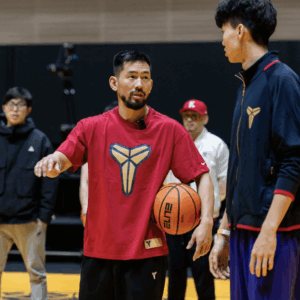
Why traditional basketball training session structure fails
Most basketball trainers have encountered this scenario. A player comes to them frustrated: great in workouts, struggling in games. They shoot well with no defender. They handle the ball cleanly in stationary drills. Then the game starts and everything falls apart.
The issue is how we structure basketball training sessions. Josh explains the disconnect by examining what’s actually different between practice and competition.
“If we just think about the skill itself of shooting in a game, what does a player have to decide on the court?” Josh asks. “Spacing, where is the defender in relation to me? Where are my teammates? Are my teammates open for me to pass to? Where am I in the game situation—is it the fourth quarter and the game is tied, or is it the first quarter?”
That’s five factors a player processes before every shot attempt—and traditional shooting drills address none of them.
The typical workout structure looks like this: pick five spots, make ten from each, work on footwork variations. Nothing inherently wrong with these drills. But there’s no decision-making, no reads, no defensive pressure. The player practices shooting in a vacuum, then wonders why the skill doesn’t appear when context returns.
“You can see why there’s a missing gap,” Josh says. “There’s no decision-making. There’s no making reads.”
How to structure basketball training sessions: Josh’s framework
Every individual workout Josh runs starts long before the player steps on the court. The foundation is what he calls a needs analysis—understanding what the player actually needs based on their game situation, not just what they think they need.
“The first thing I’m always trying to identify is what we’re trying to accomplish or what is the end goal in mind,” Josh explains. “Their age, their training age, how long they’ve been playing basketball and why are they coming to you.”
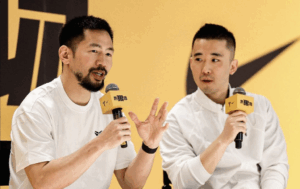
Step 1: Watch the game film first
For any player he works with, Josh reviews their previous season’s footage before designing training sessions. He focuses specifically on turnovers, missed shots, and successful plays.
“I want to see the type of things that they’re experiencing on the court so I can make our session as representative as what they might see and have the skills that they need to be successful in those situations.”
This film study reveals patterns. Maybe a player struggles against physical defenders who deny the ball. Maybe they turn it over consistently when trapped in the corner. Maybe their shooting breaks down specifically on catch-and-shoot opportunities off screens.
Each pattern suggests how to structure the training session that follows. And keeping detailed client notes and session history means you’re not starting from scratch every time—you can track what’s working and adjust accordingly.
Step 2: Structure basketball drills to match complexity to the player’s level
The workout itself introduces complexity appropriate to the player’s development stage. Advanced athletes get more decisions to make, more scenarios to navigate. Beginners might only need to read one thing—defender close or giving space, shoot or drive.
“Based on the player’s training age, that’s what will dictate what the workout looks like,” Josh explains. “If it’s a very advanced athlete, we’re gonna add more complexity, more decisions. The lower level the player is, the less variable we make it.”
This is the constraints-led approach in action: rather than prescribing exact solutions, Josh manipulates the training environment to help players discover effective solutions themselves.
Step 3: Structure sessions to keep the game in the training
Josh’s early training philosophy looked like most traditional approaches: heavy individual drill work, lots of reps on specific skills, minimal live play. The result was limited transfer—skills practiced in isolation didn’t consistently show up in games.
“You can train all you want, but if you’re not in game situations or you’re not playing the actual game, you’re doing a huge disservice to yourself,” Josh says.
For Jeremy Lin, this meant restructuring off-seasons to prioritize live play. Josh describes driving five hours to find high-level runs in LA during one off-season—not for specific skill work, but for quality competition.
The practical takeaway when structuring basketball training sessions: individual work has its place, but five-on-five, three-on-three, and one-on-one should be non-negotiable components. This is also why reducing time spent on admin work matters—the hours you save on scheduling are hours you can spend finding quality runs for your players.
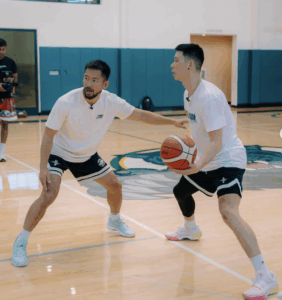
The constraints approach: how to structure basketball training sessions using environment
Josh shares a story that illustrates why constraints often work better than verbal coaching cues.
He was working with two players on a simple drill—make two in a row, move one spot, work around the arc. From the corner to the top of the key, both players struggled. Lots of short misses, inconsistent mechanics. Josh tried external cues: get your arc higher, hit the back rim. Nothing clicked.
Then he tried something different. No verbal intervention—just constraints.
One player had a flat shot, releasing with an upper-body-dominant motion. Josh stood in front of him with hands up. If the player shot flat, the ball would hit Josh’s hands.
The other player had the opposite problem—extremely high arc but rotating his entire body, landing several feet forward. Josh stood where that player typically landed. The only instruction: don’t land on me.
“They hit 12 shots in a row,” Josh recalls. “The kid who was over rotating, when he hit his seventh or eighth shot, he just started cackling. He was like, ‘It’s going in. My shot, I’m hitting every shot.'”
The shots went in without conscious thought about mechanics. The constraint—Josh’s physical presence—took away the problematic solution and allowed effective alternatives to emerge naturally.
This principle should shape how you structure basketball training sessions: sometimes the environment teaches better than words.
The Jeremy Lin lesson: focus beats scattered effort
Josh has worked with Jeremy Lin since college and managed his off-season development throughout his NBA career.
Early on, their approach looked like what most ambitious players attempt—extensive documents with 27 bullet points of things to improve. The realization came quickly: trying to improve everything means improving nothing effectively.
“Now we’re more hyper focused,” Josh says. “We try to have one overarching priority for offense and defense and how we are going to attack that during the off season.”
One focus on offense. One focus on defense. That’s it—even at the NBA level with full-time training availability.
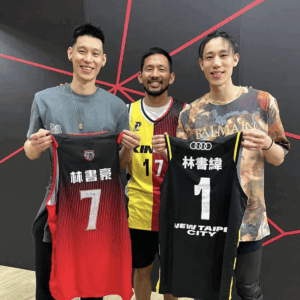
The skill nobody trains: reflection in basketball training sessions
Josh identifies one capability that separates players who accelerate from those who plateau: deep reflection.
“One thing I see lacking in a lot of players today is the ability to reflect deeply on what’s going on,” Josh observes.
The problem starts immediately after workouts. Players grab their phones, open Instagram, and mentally move on. But as Josh notes, “You’re only limited by how many hours you can work out. You’re not limited by how much you can think about the game.”
He tests this during sessions. After missed shots, he asks: “The last three misses, where’d you miss?” Many players can’t answer—they haven’t tracked the pattern.
“The best players can solve the most problems on the court. That comes from reflection.”
Some trainers build post-session reflection into their workflow. Tools that centralize player information make it easier to document observations and reference them later.
Structuring basketball training sessions for long-term development
One final lesson from Josh’s work with Jeremy Lin: effective training structure anticipates future needs, not just current weaknesses.
As Lin approached his 30s, Josh noticed changes in his first-step speed. Rather than just training to maintain what Lin had, Josh started building skills Lin would need as his athleticism evolved.
“I had to think about if he wants to play to 37, 38, what does he need to change? What happens when you lose speed?”
The answer: extended range. Shooting from four-point distance forces defenders to guard tighter, which opens driving lanes that slower first steps can still exploit.
Similarly, Lin’s explosive driving style meant constant contact with the floor. One season, they tracked how many times Lin hit the ground per game because of how it affected recovery.
The training response: develop floaters, single-leg finishes, mid-range options. Ways to score effectively while hitting the floor less.
When structuring basketball training sessions for younger players, think ahead. The skills that serve them at 16 may not serve them at 26. Training should build toward the player they’re becoming.
Listen to the full episode
Josh Fan’s approach represents a shift in how elite trainers structure basketball training sessions—from prescriptive instruction to guided discovery, from isolated drill work to representative training, from scattered improvement attempts to concentrated focus.
For coaches looking to help their players bridge the gap between practice and games, the principles here offer a starting point: watch the film, understand what players actually face, and design training that prepares them for those specific challenges.
If you’re running a training business while trying to implement this level of intentional coaching, systems matter. Check out how Tyler Leclerc built scalable systems while growing to two facilities—many of the same principles apply.
Structuring effective training sessions requires time—time you lose to scheduling texts and payment follow-ups.
The trainers doing this level of intentional work aren’t managing their business through text threads and Venmo requests. They’ve systematized the admin so they can focus on what matters: developing players.
CoachIQ handles the business side so you can structure training sessions that actually work:
- Automated scheduling eliminates back-and-forth booking so you can spend that time on film study
- Payment processing runs in the background—no more awkward payment conversations
- Client management keeps player notes, session history, and progress tracking organized for your needs analysis
The best trainers aren’t just good coaches. They’ve built systems that give them the headspace to coach at this level.
Full Episode Transcript
The following is a lightly edited transcript of the episode above.
▶ Click to expand full transcript
Host: Welcome, Josh Fan, owner of Awaken Training. Thanks for being here, Josh.
Josh: Thanks for having me. We’ve known each other for quite a bit of time, so happy to see that you got your own gig going on and happy to chat about things we’ve been learning in the field.
Host: Absolutely. I think the backstory was during COVID times, you were with Jeremy Lynn out in California at Jordan Lai’s gym while I was working out there. And I think you guys needed an extra body. I was I was playing defense, rebounding, doing whatever you guys needed. And I remember that workout vividly and how much it opened my eyes up to a different way of training. And it’s cool to see how everything has progressed since that time. would love to use that as a great segue and talk about your individual workouts and explain to everyone what it looks like when you’re working with an individual athlete.
Josh: Yeah. when I’m working with an individual athlete, I think the first thing that we’re always that I’m always trying to identify is what we’re trying to accomplish or what is the end goal in mind. And so for me, their age, their training age, how long they’ve been playing basketball, and why are they coming to you, So whenever someone tries to come, whenever someone comes to you as a client or player coach relationship, there’s there’s a reason and and really trying to understand how I’m going to help them. So I think it always starts with like a needs analysis. Where do we want to go with this player? And then from there, it’s understanding how much time do I have with this player. Some people want to come for just one one session. Some people want to come for multiple sessions a week. And then understanding how long of offseason you have with them, So if you only have two weeks with them, what are you realistically going to accomplish with an athlete? Is it is it going to be four magic drills that’s going to change their game or is it better to use that time to teach them how to think about their own training? So I think from a a macro global thought process those are the things I’m always always thinking about and then from there that’s how I build the framework so of a workout. So a lot of common problems that people have come with me is my shooting and I’m sure you’ve gotten this question is the drills that I do for shooting it’s not just it’s not transferring to the game. I shoot really well in practice, but in games I struggle to hit shots. And I don’t know why. Physicality feel very I struggle a lot when I play against very aggressive defenders who are constantly denying me the ball or just attacking me. Think of, Patrick Beverly type of defense and I I turn the ball over. I do a lot of ball handling drills and for some reason I still get the ball stolen and make turnovers in during the game. So those would be like very common examples of a problem. a player comes to me. So within an individual workout, it’s it’s it’s hearing what their problem is, but also as a coach, I need to observe and see what’s happening on the court, too, and what I think also they need to work on. So that also involves me watching a lot of game tape. So for any player that comes before they even step onto the court, I usually generally if they have game tape, I’ve tried to watch at least their past seasons clips on offense and defense and especially turnovers because I want to see what they are seeing or I want to see the type of things that they’re experiencing on the court and so I can make my practice or our session as representative as what they might see and have the skills that they need to be successful in those situations. Once I do a needs analysis of a player, that’s when we start the workout, And so during the workout, I’m trying to make it as representative as what they might see on the court. would you want to do an example that we could we could talk through or how would you like to hear more about their individual workout?
Host: Yeah, I I love the example. The one that like we get a lot is the shooting one. I’m I’m working on my shooting so much. I shoot 80% in practice, but then I get in a game and I’m shooting 20% and I sometimes I can’t even get my shots off. what do I do?
Josh: Yeah, let’s talk about that one. And that way I can paint a picture so coaches who are listening to this can understand better of of how I might train an athlete, when we take a task such as shooting, it’s a very complex task. Most people think it’s like form, your shooting form, different footworks and that stuff. The next level would be introducing some complexity to it, which is having a defender close out. And those are great, but if we just think about the skill itself of of shooting in a game, what does a player have to decide on the court to decide whether to shoot, So spacing, where is the defender in relation to me? Where are my teammates in relation to me? Are my teammates open to for me to even pass to them at this moment? Where am I in the game? This game situation. Is it the fourth quarter and the game is tied or is it the first quarter? How I’ve been shooting this entire game? Am I 0 for Am I 0 for five right now and I have zero confidence in my shot or am I five for five and I have the green light? right off the bat, I just named five factors. those five, they’re not all the factors, but five things a player is considering that’s going on in the the back of their brain when they are deciding whether to shoot or not. Now, when you’re doing your own workouts, most people traditional shooting would be I’m going to choose five spots, going to make 10 from 10 from each spot. I’m not going to leave the spot till I make 10. And they might change different full work and they might do different spots from the game, but that that’s okay. But you can see why there there’s a missing gap. there’s there’s no decision making. There’s no making reads. And so those are the type of things that I would want to introduce in a workout that would bridge the gap because ultimately coaches who are listening to this, you’re trying to bridge the gap between our individual sessions and the game, And we are the in between. We are trying to handle this gray area and make sure the skill is transferring over, So we want to obviously we can’t do five on five, like it doesn’t make sense for us to do five on five in in a practice in an individual workout. So based off of the clients or the players training age, that’s what will dictate what the work looks So if it’s a very advanced athlete, we’re going to add more complexity into it, more decisions he has to make, more scenarios we’re going to make. The lower level the player is, the less variable we are going to make it, We’re not going to have she might the player might have to make only one decision
Host: Or they might just need to read the defender’s space or I will have the defender give a few certain looks to make it a little bit more obvious as to what they should do which is either shoot or drive. So that is a a simple overview of how we would address that scenario and
Josh: That’s how we would that’s how I address shooting.
Host: I like it. as a whole, you’re you’re first looking at the bigger picture. You’re almost working backwards. You see the game, you see what that player is doing in the game. Maybe there are some things that’s presenting yourself that they’re not doing as effectively as they could or some things that if they got a little better at the rest of their game would have an even greater impact. and then specifically addressing those and trying to make it look like what they’re being challenged with in the game and then meeting that to their current level, which I think is a really cool way of doing it as opposed to maybe a more traditional way, which is starting with an ideal end picture and then just building the building blocks from there. and it goes A to B, B to C, C to D, and then eventually you can get to more complex stuff where you’re you’re showing that there are still complex things in the game where even beginners are are still able to play the game. It’s still pretty complex. we can keep some of that complexity in these training sessions. And I I thought you made a really good point there towards the end about if you have an advanced athlete, like you can throw a lot more at them. And I think that’s a great segue to a player you’ve worked with for over 10 offseasons, a very very skilled player that most people in the world know, Jeremy Lynn. Can you talk about how you would approach his off seasonasons and how they progressed from maybe your first off season to what are you on? You almost at 15 now.
Josh: Yeah. So Jeremy and I started working when he was, 18. And not officially, but we met in college. I was at Boston College, he was at Harvard, and we had a mutual friend connect us. And we just both were two gym rats who loved working out, who loved the game. We were in certain ways polar opposites in the sense that Jeremy spent most of his time playing the game versus I spent a lot of time training the game. And that was my first exposure to I’m hm, I train all the time. When I say train, your typical I go to the gym, try to get 500 makes in an hour of stationary ball handling, just your very traditional OG workout that we think of when we think of basketball workouts. Yeah.
Host: But he was much more focused on playing five on five, three on three, oneonone. It’s not that he didn’t do those things, but it shows that you can become become very very high level at the game by obviously playing the game itself. Anyways, back to your question. at that point, that’s when we started working out together and we always had a pact where if he ever made it to the NBA, would I want to come work for him? he did and that was the the path that I took and we started working together and I would be responsible for his offse offseason training. And so during his NBA career, as you go from NBA team to NBA team, every NBA team has their own individual stren individual strength coach, but they also have their skill development coaches as well, And so I think what was challenging at the beginning was there was a lot of different voices and a lot of different opinions on how we should do things or what was the most optimal way of doing things. And so that sent me down a path of of trying to learn like what is how do we develop skill, Because for the longest time, you as well as a as a a player is you grow up reading watching YouTube videos, reading slam magazine, reading articles, and that’s how we learned to to train or or watching,
Josh: For me it was watching Ganon Baker. Yeah,
Host: This is before your time, but you know
Josh: Yeah. or or playing defense with an ore. I don’t know if you remember those videos where he would have like a rowing a rowing ore and that would be the o that would be the original stick. You know,
Host: I did not see that. That’s You have to pull that clip up.
Josh: Yeah, that’s awesome. I I learned from the
Host: With the stick.
Josh: The Pete Maravic VHS tape. That was how I learned how to shoot. We had to watch that downstairs with my dad before we could get on the court. But
Host: Yeah,
Josh: Those are the OG.
Host: Not to get too not to get too sidetracked, but it is very similar to how I treat all my players. And that’s where I got this framework is before we even start any offseason workout. I’ve watched every single turnover that he’s had the previous season, every single missed shot, every single made shot. And I’m trying to understand what happened this last season within his team dynamics and what was happening on the court. And so early on in our I would say early on in our training, we would have these extensive shared Google Drive, documents that were six bullets long with four sub bullets for for each one. They’d be like, “This is what we’re going to accomplish this off season.” And I was 27 bullets. I’m like, “Okay, this this is probably not going to work.” but as a typical overachiever and why you become good at stuff is you want to get better and you want to get better at a lot of things and so early on I think that’s how it started like we want to get better at everything.
Josh: Yeah.
Host: But now we’re we’re more hyperfocused on we still want to improve but we try to we try to have a priority like a one overarching priority for offense and defense and how we are going to attack that during the offseason. Also, I have the luxury during the offseason when I was living, in the area with Jeremy working for him full-time is we were working out five, six times a week. some early on in his offseason, higher volume, two days, two workouts a day, and then towards the last couple years, it’s we we’ve dwindled that down to one workout a day. I think that’s an awesome insight for basketball players and coaches how concentrated the focus has gotten. And I think that’s really important because a lot of the players that come to me, same thing. Like if if you’re coming to a trainer, you probably want to improve and you’re a pretty motivated individual, but you almost lose the effectiveness if you have 10 things you’re chasing. And so to have a guy at the highest level who’s done so much with the game and he has an off seasonason and it’s one point of focus on offense and one point of focus on defense and just attacking that I think is a an important point that all basketball players should consider a little bit more. Now maybe when you’re younger you do need to have two or three u because you have more to do with the game. Like Jeremy’s a proven professional. He has an idea of what his role is going to be. but if you’re trying to carve out a role, that might be slightly different. What advice would you give to players? Now is a we’re right now at the end of the season. March Madness is about to start up. If you’re giving advice to a player during that time frame as they look towards their off seasonason, how would you suggest they structure it? Would you suggest every player go get a trainer? What’s your advice to these players?
Josh: Yeah, that’s a great question. And I’m I’m not trying to over complicate every answer I give, but I think the more obviously, the more your your brain goes down different rabbit holes and different thought processes. The first thing in the off season, I think one thing that I see a lack of in a lot of players today is the ability to reflect and reflect deeply on what’s going on. And if that is a skill that you can develop, I think that will go pay huge dividends for you down the road. And what by that is postworkout, post individual workout, what does every player normally do right after the workout?
Host: Usually on their phones,
Josh: When you’re like they go right onto their phones. They go right onto their phones. They open, Instagram, Tik Tok, whatever. They start texting and whatever. They go on to the next thing in their life and they get they call an Uber or they bike home or whatnot or whatever, drive home. And so my point is is like if you want to catch up to other players, surpass other players, you’re only limited by how many hours you can work out on the court in your body, But you’re not limited by how much you think you can think about the game. Obviously, there is a limit. But what by that is if you can spend more time reflecting on the workout, what happened in the workout, what happened, what happened during the playoffs, and you’re constantly reflecting on that, I feel like that is a very, very powerful tool in shaping how you want to move forward with your workouts. going back to your original question, which is starting the off season, what should players be thinking about? Well, I think the easiest the easiest most salient thing in your mind is going to be your your worst games or the defenses that you struggled against, think about that game where you had five turnovers. Go watch that game. Think about that game where you’re a 22. You averaged 22 points a game and you played against this team. They they kept you down to 12. Well, don’t you think every team that next season is going to be watching that game and seeing what they did? Oh, they denied you full court. This is, this is very this happened to one of my players. They they sent two two players to face face guard the player front and back and they just like formed like a ring around them and just follow the player, deny full court. They were they they were like, “If the other four players on your team beat us, so be it. We don’t care. But we’re not going to let you beat them beat us.” And so understanding what you’re going to see because what’s the point of you going into your off season and training this whole skill set that you feel like you need and is the biggest priority and then you get, you show up to preseason and you you guys play your first few games and it’s nothing like what you trained, So I think first and foremost is is identifying that priority, being reflective on your past offseason. Now, let’s get to the meat and potatoes, which is what you’re going to work on, And I do think you have to have some type of plan. Any type of plan is going to be better than no plan.
Host: Yeah.
Josh: I think what happens, what I see is a lot of the players who are more like myself who love the grind or love the work, they try to train alone and they try to do a lot of individual training on their own. And so I think that’s also we started this conversation by you introducing how we met which is at Jordan Wall at Jay Law’s place in LA. And the reason why we were in LA during that time is because we were looking for live play. We were willing to drive, five hours to get highlevel runs because you can train all you want, but if you’re not in game situations or you’re not playing the actual game, you’re doing a huge disservice to yourself, if you were to ask me about Jeremy’s workouts compared to what they workouts look like now in the offseason, I would say, in our previous offseasons, early on in his careers, it would just be five individual workouts. When I say individual workouts, it would be just be me and him taking him through drills. There’d be some defense, but a lot of stuff would be on air with with no defenders working on a specific skill that, we were training. And what I realized was that there was a lack of transfer from the moves we were training or the things we were doing to the game. And that’s what set me down this road of trying to understand what is this gray area. And that’s where I stumbled upon the ecological approach, the constraints approach and all those things that you guys have been hearing about lately and how as humans in general we we acquire skill. And so I would really encourage any individual listening to this when you’re structuring your offseason, you can’t get rid of the game. The game is huge learner for yourself. So even if you’re doing small-sided games, even if you’re doing, these games you’re seeing on on Instagram and and they are representative of your environment, you still want to play five on five, three on three, oneonone. And so finding what works in in in your own weekly structure. So understanding like what weekly structure is going to work for you and what you want to accomplish in those sessions, I think is really important for individual players to understand. I think players just are like, “I’m going to the gym. Mom, dad, I’m going to the gym. I’m gonna go work out.” You go you go to the court. You go work out. You think you you go lift weights and you’re like, “Cool, man. I work so hard. I’m my friends that my friends in Spain right now on vacation with his family and I’m out here grinding like I’m going to crush him next off seasonason.” And that’s true. If you have the attitude of outworking, generally you you will improve. But I think it’s yeah understanding the structure of of what you’re going to work out and trying to make it as live as you can. When I say as live is is giving yourself the opportunity to make the same decisions that you would make in the game, So if you can get one other person, two other people to just commit to to training with you this off seasonason, that is the best thing you can do for yourself. Yeah, we should absolutely clip this up and and put it out for players to see because there are so many players that genuinely want to get better, but they’re operating off of a paradigm where they feel hard work and work that will get them better is stripped of everything. And that’s how I train. Sounds like how you were training as a player. But the reality is if you want to make those big strides, like you said, you can’t take the game out of your training. And so having pieces of that that fit into your off seasonason is is super critical. And the reflection piece that you mentioned I think is one thing we’ve changed a lot in our trainings where we’ve taken phones out of the gym. Phones are you’re not allowed to be on your phone in the gym. And this summer every player will have a journal and they’re going to do that work where they have to reflect. They have to have a pen or a pencil and write things out. Take some time. And as I’ve done that with some individual clients, I’ve noticed the work that we’re doing, even though it might not be the perfect situation in the game, the the perfect scenario. It’s never going to be perfect if they can take some time to reflect on it, the transfer is way better. And it might just be knowing themselves a little bit more deeply or I’m not sure what it is exactly, but I do think that’s a golden nugget that every player should be taking more time to to look into. is just know more about yourself.
Host: Hey, I just want to take a quick break. My name’s Russell. I’m one of the founders of Coach IQ. We put on this podcast here. Our goal is to interview top coaches and business owners in the youth sports space across the United States and give you guys insight on the ground floor. How are they running their business? What do they think about the current ecosystem? And what are their thoughts on where things are going? we’re super excited to bring this to you guys. If you don’t know about us, we are an all-in-one sports management platform. We run a lot of the businesses that we have on the podcast and we’re fortunate enough now to work with about a thousand sports coaches across the United States and it’s our goal to make your life as easy as possible in running the business itself. Website, scheduling, payment management, everything handled seamlessly on our platform. And really what separates us is we are built specifically for sports. We’re not powering nail salons. We’re not powering Pilates studios. Every second of the day we focus on you. if that’s something you need where you’re looking to get your time back or you’re looking to grow your business, Coach IQ is really the only platform thinking about you every single day interviewing and working with the top coaches in the industry specific to sports. if that’s something we can help you with, we would love to connect with you. You can visit our website, coachiq.com, schedule a free demo there. The demos are awesome. It’s really less about selling and much more about just walking through what we’ve learned and providing value on what other coaches are doing. And if it’s a match, it’s a match. absolute no-brainer. Go schedule a demo. worth the time. And thank you guys for tuning in. Thank you guys for watching. Thank you for customers who are working with us. It allows us to do all this make better product and the main goal help athletes all across the United States and the world get a phenomenal experience from you guys the coaches.
Josh: Well, let me give you an example. Lots of times in shooting in a workout, say we’re at a certain spot, we’re doing a certain drill and a player has missed his last four shots or last three shots. a question. I try to have a more self during our workouts when I’m working with a player, I try to get them to be self-reflective because I will not always be with them right at their practices, right,
Host: In the gym, by themselves, or at team practices.
Josh: So often when I see a player struggling with something, I will say, “Hey, the last three misses, where’d you miss?” And it’s such a simple question. I have a group of players who will be like, “Off?” I’m like, “What?” like, “Yeah, it was just it’s it was off. Like it was hitting the rim.” I’m like, “Yeah, but where were you missing?” And I just use that as an example where I’m like, “Hey, the last eight shots you shot, like what part of the rims did they hit?” And for that’s something I’m looking at obviously and I’ll be like, “Oh, your last six shots were were short were all short.” Like you you didn’t pick up on that or like is that something you didn’t see? That’s not what I say to players, but like that’s what I’m trying to get them to pick on. These are some small This is an example of something something I would want a player to pick up on when they have a spot where they’re doing really well. I want them to be I was like, “Hey, we were on the right side of the court. You weren’t able to be as successful as you were on the left side of the court. What did you do differently here?” And I want them to tell me I I I see it what they did differently, but I want them if if they are noticing or picking up the things that they are doing to solve the problems because at the end of the day like the best players are the ones who can solve the most problems on the court, they are the ones who can adapt to any type of situation, any type of defense and have solutions for for each of those things. And that comes from reflection and your coach. You can’t wait when you meet some situation on the court that you haven’t been in in or you’re having a hard time getting out of shooting funk or you can’t figure out how to create space on this guy. You can’t say, “Oh, time out.
Host: What do I do?” Like,
Josh: “Yeah,
Host: Coach,
Josh: How do I how do I solve this this this situation?” You got to be able to to do that on the fly. And how can I train that skill? How can I expect my players to have that skill if we’re not executing or training that skill in our individual workouts, So this is why, we will give a problem to the players to solve. say the drill is a problem. I’m I’m trying to get them to solve this problem, this coverage when the defense gives you this. often it’s it’s not just explore. I think that’s what a lot of people have issues with. Maybe the the approach is that it’s just just explore and you you’ll figure it out. But I’m trying to guide their intention to where they should be putting their intention and attention to to solve this problem and then giving them some guidepost of like try this, try this, try this, see what happens. So I’m trying to funnel them to a solution space that we know to be effective because
Host: Obviously we see players in the NBA, players with high level D1 and and how they solve how they play against different coverages and we know that there are certain solutions that are more effective than others. And we want our players to be in the process of doing that.
Josh: Guided discovery, the coach or trainer as a guide and not a god, not the all- knowing person. I think that’s a a big switch that a lot of trainers have made. I know certainly in my case, I I thought effective training was telling the solution to the player and that was why I was supposed to be in the gym. But once I made that switch and it was really about how can we help them come to the solution and and they have the belief that they figured it out, then they’re much more empowered when they leave the gym because that’s that’s ultimately what we want. That’s what’s going to reflect better on the actual trainer is if the players are doing it when it matters, which was was well said.
Host: Can I share one more example?
Josh: Yeah, please. Please. I love it.
Host: This example highlights when you were talking about the coach being guide to discovery. I wanted to use an example to to highlight how I saw this to be true as well. And so there was one workout where two players we were just you have to make two in a row. You start from one corner and you got to go all the way to the other corner. You make two in a row. First player makes one. Second player needs to make the second one. Two in a row before you can move one spot. And then you just keep going till you get to the other other side. Now, when they started from the corner all the way to the top of the key, lots of short misses, left, right, not shooting well. This is I would say this is a fairly easy drill. Try to get your heart arc higher. A lot of external cues. Try to hit the back rim. And it didn’t ste it didn’t seem like the words were having the effect, the desired effect,
Josh: And then obviously when they got to the midpoint, it was it was I was using as an experiment. I was I’m only going to I’m not going to give there’s no verbal intervention. I’m going to go from the middle for they reach the middle point to the other corner and I’m only going to use a constraint. One player is very upper dominant in his shot. So he gets to the top and then he just uses the upper body mainly to to shoot the ball which results in a very flat shot. Now that could work if the ball went in but the ball was not going in for he’s not shooting at a high percentage. So a big thing is shooting with a a higher arc, whatever that means to you, So obviously the easiest constraint was I stood in front of that player and had my hands up the entire time. Now the other player had the exact opposite problem. He shoots with a super high arc like almost touches the ceiling every time, but he also rotates his entire body. So his pelvis comes forward and he, he might start square at the basket, but when he ends every shot, he lands forward and he’s almost landing
Host: This way facing to the side because he has to create power to shoot so high. So he shoots super high like this and he falls forward and he feels very unbalanced with the shooting.
Josh: So for him, I stood because he would probably jump three and a half, four feet, not that far, but three feet on each shot. I would stand in front of him. I’ll be like, “Look, if you jump this far, you’re going to land into me. just don’t land it to me. That’s your only task.
Josh: I kid you not, a kid who they went from shooting probably I would say 20 30% they hit 12 shots in a row.
Host: And that to me was the biggest evidence that I need to see. with with there’s no verbal intervention, nothing.
Josh: Right. It was so ridiculous that the kid who was over rotating and jumping super forward and unbalanced when he hit his seventh or eighth shot in a row, he just started c like laughing, cackling with a huge smile on his face. He was like, “It’s going in.” That’s what he said. He said, “It’s going in.” He’s like, “Oh my gosh, it keeps going in.” He’s like, “My shot.” I’m like, “I’m hitting every shot.” And he was just laughing. I I didn’t want to like It was such a surreal experience. I didn’t want to stop what was going on, so I just like let him laugh. But it was like he would shoot the ball and he didn’t even know he was going in. He was just like he was just swishing his swishing it. Now this is crazy to highlight self-reflection. They get to the end, they finish the back half super fast. They made, shot at a very high percentage. I would say probably 85 90 to finish the last half of the workout. I go, “What was the difference between the first half and the second half?” One of the players goes, “We made shots.” And I’m like, “Okay, but okay. How how did you make shots?” And he was like, “It was more smooth.” I was like, “Okay.” Like, “But what was different between the first half and the second half?” They gave like three or four different answers involving their mechanics. I was like, “Okay, but what was different? Was there anything different how I was they were like, “Oh, you were in front of us.” I was like, “Yeah, and what happened? Did you have to think?” And they’re like, “No, I just didn’t want to get blocked, so I shot over you.”
Host: Right.
Josh: Or I didn’t want to run into you. And I was like, “Okay.” So my point of of sharing that for two reasons is I think coaches who hear this or listen or who are trying to become better skills trainer they think you use the example as a god right or we think of the coach as all knowing and needs to give explicit detail for everything right yeah no your shoulder angle should be like this now there’s nothing wrong with details details are important I’m not disagreeing with there are some details that make something more effective they’re not effective. But when we’re trying to get certain skills to emerge, you can see the power of of selforganization. and when I say self-organization is me, I was a constraint. I was preventing them. I was taking away a solution space. I was taking away the low arc shot because if we shot the low arc shot, he would hit my hand,
Josh: And allowing the athlete explore how they’re going to solve that problem. Amazing things we will emerge. Effective solutions will begin to emerge. Now, we have to go down a whole thought process of that as well. But that’s just another example I wanted to highlight of as a skills trainer, as a coach, you sometimes putting them in the environment, the ultimate thing we’re trying to accomplish is help our players improve and help them find solutions that are going to work for them during the game and at the next level of play. So that’s if that’s our fundamental goal. All we should care about is not hearing our voice or oh I gave the best instruction or I give the best technical detail is is getting the players to be able to do
Host: Right
Josh: To acquire the skill,
Host: It that is absolutely the most important thing and the thing that should be the the best marketing is how well the players go and play and when they do the actual thing. I have we we we got to get on another podcast because there’s so much more to talk about. A brief aside, I was looking at a study of police officers in combat situations. these are life and death situations. Have one group that does the constraint approach in how they can defend themsel against knife fights and and gunfights. And then the other group does a little bit more explicit teaching with an instructor who says if they do X, you do Y, and this is how you’re going to save yourself. Then they put them in this simulation that that emulates a live scenario. What happens? The constraint led appro approach group, the ones that didn’t get explicit instruction, they had a higher survival rate than the group that was told explicitly what to do. They died more frequently in this simulation. But when you take them out and you ask the two groups how they felt and how prepared they felt, the group that had explicit instruction felt a lot more confident in their ability to survive these situations. So obviously basketball not life and death, but when we do apply these things to more serious situations, it’s funny how things happen where if I had to pick between those two, knowing the results, I’m going to pick survival. I think anyone will. But as far as how you feel, if you want to feel more confident, more prepared, is that true confidence? Is it false confidence? It’s a it’s an interesting thing to think about and it can pertain to basketball. I hope today in this podcast maybe we gave some perspective shifting or perspective questioning thoughts for for some coaches out there. And I want to end with talking about your recent travels because I I think a lot of the the listeners here will be in the US and culturally basketball is different all around the world. You have recently been to it was North China and Kazakhstan. you’re going back to North China in a few weeks. I know you’ve been traveling like crazy. Can you talk about those two experiences and and maybe some insights from seeing basketball outside of the US?
Josh: I think if you are an effective trainer or a good coach, you can help any group of people, Or any type of player because if it works, it should work across the spectrum, And so I think traveling abroad is what’s been super valuable for me. And I know you’ve traveled a lot. I know Coleman’s traveled a lot as well and there’s a few things it highlights it. It highlights differences in communication. Are you able to communicate effectively?
Host: Yeah.
Josh: Words are not understood the same in other places, first that I think that going to a different country first allows you to evaluate how effective are you communicating and how effective is is what you’re communicating being heard and understood. Then it’s understanding how cultural upbringing and different cultures affect how we learn because those are very important factors and those are things that you can take back to home. So let me give you an example for most Asian countries is that the coach is considered the coach or the teacher is considered they’re usually often more revered or respected and they are considered almost having a slight a god status in the role of a of a student and a player right so when a coach tells you do it like this or this is how you should do it you don’t say why or you don’t think Why? Let’s not not let’s not not say why, but let’s like we don’t think why. You’re just like, “Oh, coach want me to do it. I do it.” Right. Yeah. And so
Host: What I’ve noticed is in these types of cultures like these players first don’t have as much of a they don’t reflect as much nearly as maybe some of the other players that that I’ve played with.
Josh: Yeah.
Host: And they’re not used to thinking on their own. So how would you solve this problem? They’re almost caught off guard like, “Nobody’s ever asked me this. Nobody’s ever told me to think about these things.” I’m like, “Oh, you don’t think about no, I just do what coach tells me to do.”
Josh: And so it creates u there’s a lot of silos in different in that type of culture and it creates a lot of players who are really good at one skill. So what by that is, when I traveled in Asia, there was a lot of players who like they would say to me like, “I’m a shooter. I’m just a shooter. Like all I do is shoot.” and they won’t think oh, well, if I’m a really good shooter, that means defenses defenses are going to run me off the line, which means I need to be able to put the ball on the ground at least for two dribbles to either drive to the basket or maybe get into the paint so I can pass to somebody else. I just think oh, I don’t if you ask them like, “Oh, do you do any dribbling stuff?” They’re like, “No, I just I just I just shoot. That’s my only role on the court.” Or they’ll say like, ” I’m a big like I’m a big man.” okay, what does that mean? They be like, “Oh, I only do drills like in the post, a low post. I work on post moves.” They’ll never think about shooting a three or mid-range or working on just shooting in general, I think traveling to different countries, you can see different types of upbringings and I think that’s just so valuable in learning more about humans, So if we want to be adaptable coaches ourselves, we have to be able to work with all different types of athletes and and understanding how parental upbringing can affect a player, how their environment teaches them to handle stress or those types of environments, So I have certain players who are constantly looking over to their parents during the workout
Host: Or when they make mistakes, they’re constantly looking at their parents or if they missing a couple shots. And I’m what is that? Because there’s a lot I think basketball the reason maybe why some trainers or why we’re not as effective as building transfer from our training sessions to the real game is that we we evaluate what players need to work. We’re too narrow with our thinking. We think it’s it’s the drills which a big part of it. We think it’s the individual session that’s going to magically transform our game. But there’s I think me being with Jeremy in the NBA, me being a coach in for the Beijing Ducks, which is a CBA basketball team, and then me doing these camps is there is so many other factors that go into determining what is going to help a player improve and what’s going to move the needle for him that
Josh: Right
Host: Doesn’t just involve the one or two interventions or the workout that you put them through for one hour once a week.
Josh: Right.
Host: Right. And so that has been where I’ve explor I’ve been that’s the space that I’ve been trying to explore more is how do they handle pressure? How do they handle failure? What are the limiting beliefs or what is the self-t talk that is going on in the players? Like the chatter I always want to know the chatter like what are you telling yourself? What did you say like after that game like at halftime when you started 0 for four? Like tell me what were you thinking at halftime? and they’re like, “Oh, I’m not.” And I’m trying to get them to verbalize and and talk about those things because to me, the off season, if you’re working with a player once a week or let’s say at most, three times a week, that’s not that many sessions if you do the math,
Host: It’s not that many sessions. And and a lot of players, if you’re training with a lot of players, once the season starts, you’re like, “Have a great season. Contact me when your season’s over.” No. I’m at my players games. I’m watching film with my players. I’m texting my players. I’m I’m texting my players after the game on their off days. I’m asking them how they’re feeling, what’s going on, what’s in their head, what are they thinking, what are they doing at their team practices because I can’t think of my players as just this the offseason oh, that’s me. It’s No, it’s it’s everything.
Josh: Yeah.
Host: And it’s terrible for business, but great for terrible for business and scaling, but if you really want to make change, those are the things that you have to do. So back to your question, I I think being exposed to different cultures and learning how to communicate effectively has been the biggest insight for me.
Josh: And then before I forget, there there is one thing about Jeremy’s that I do want to advice that I want to give the players and coaches is that for about the offseason is we always have to think ahead, not just that current season, but
Host: It depends what the type of player is. For instance, for Jeremy, I had to think about when he was getting in his 30s, I noticed that he was maybe losing a little bit of his first step speed. I had to think about, okay, if he wants to play to 37, 38, what does he need to change in his game or what needs to happen when you lose speed? And that was, okay, we need to extend his range out, And that was something that I saw Damian Lillard do with Phil Beckner that was very effective, which is shooting from a four-point line or being able to shoot from the logo. Yeah.
Josh: Which what does that do? it forces the defense to guard you closer which allows you to go past them easier and opens space on the back end. So extending his range and then his game or his play style was very dynamic in that nature and getting to the basket always and and and hitting the ground after layups. Well, I knew that as he gets older, we want him to hit the ground less. one one season we measured there was an athletic trainer and his only stat to track for Jeremy was how many times he hit the ground in the game because that would affect his overall recovery like being like his back, his elbows like falling on the ground constantly,
Josh: I had I had to think okay, we does he have a floater? Does he does he have a single leg floater, two foot floater? Is he able to be effective in the mid-range and all those things? And I had to start building towards those skills because I knew for longevity like you’re going to need those things. Now I got Jeremy at a much later age as in like we started training full-time at probably what was it 20 24 at that point versus obviously if you starting with a younger player at 12 you can start you want them to play the complete game. I think this is what Europe going back to different countries is I think Europe does a great job of not siloing players or or saying that like you’re only a shooter like you’re only the point guard so you only need to be able to pass and dribble. It’s like no every player it’s it’s positionless basketball. Every player needs to be able to do all the skills. Shoot, dribble, pass.
Host: You got to do it all. Yeah.
Josh: You got to be able to do it all. And I think that’s what makes all great players in the NBA can do at least two or three things at a world class level. Yeah, I love it. If I could summarize this podcast or at least one really important theme that maybe everyone should think about is just how dynamic humans are and appreciating that and how are you factoring that into basketball training specifically. Josh, I think you are one of the best. If you don’t follow Josh on Instagram, I’m always telling him he should post more because selfishly I learn a bunch every time he posts. But but do it now. So Josh, if if people wanted to contact you, what’s the best way to do that?
Host: Yeah, just on Instagram, Coach Josh Fan. that’s jo FAN. That’s just DM me if you have any questions. happy to chat and and talk more.
Josh: Awesome. Thanks for coming on, Josh.
