

The most sustainable sports performance business model runs on groups. Lee Taft figured that out over 35 years of coaching, and the math is simple: 10 to 12 athletes per session means your hourly rate stays high while the cost per athlete stays low. Families can afford to keep coming. And they do. Some of Lee’s athletes stayed with him for 14 years.
Lee Taft is known as the Speed Guy. He’s consulted with 9 NBA teams, spoken at the NFL Combine, and presented in over 9 countries. He also closed his first facility after 6 months and had to go back to teaching to survive. Both of those things shaped what he built.
In a recent episode of the CoachIQ Podcast, Lee sat down with Brandon Evans to talk about 35 years in sports performance: the movement science that made him famous, the sports performance business model that sustained him, and what coaches at any stage can learn from how he built his career.
Who is Lee Taft?
Lee started as a physical education teacher and basketball coach in the late 1980s. The turning point came during a pre-season conditioning session at SUNY Cortland. His coach stopped practice and told the team they were stepping backwards before every acceleration drill.
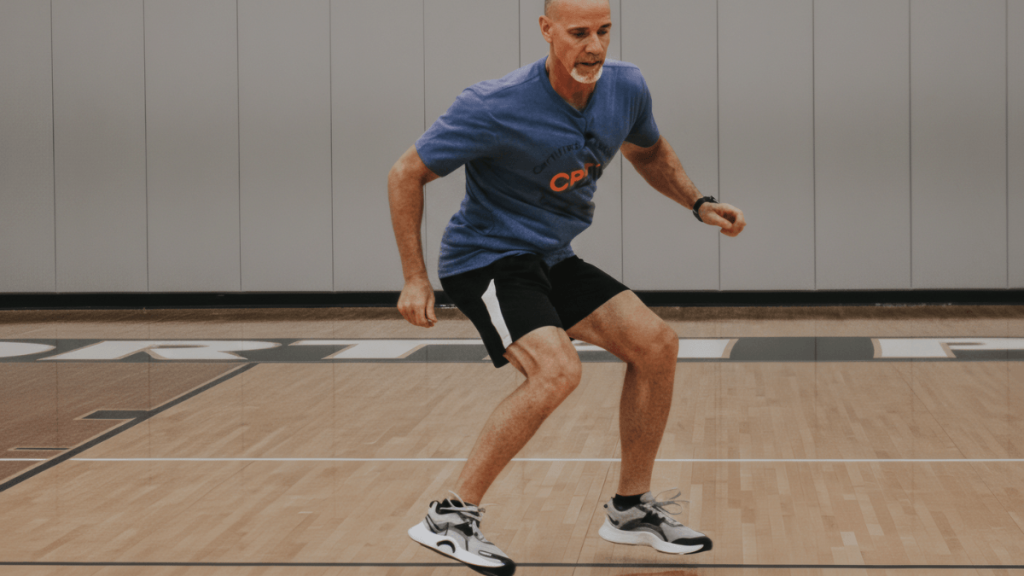
Lee watched film. Then he watched hundreds of athletes across every sport. What he saw didn’t match what coaches were teaching. Athletes weren’t stepping backward incorrectly. They were repositioning naturally, elastically, exactly the way physics suggests a body should move before a sudden change of direction.
He spent the next 15 years studying it. In 2003, he published “Groundbreaking Athletic Movement,” which introduced the plyo step and multi-directional speed training to the broader coaching world. The response was split: some coaches said it was the most useful thing they’d heard in years. Football coaches called him nuts.
Decades of research since proved Lee right. The body does it for a reason.
What is multi-directional speed training?
Most people think of speed as one thing: running fast in a straight line. That’s track and field. It isn’t sport.
Multi-directional speed training covers all planes of movement: forward, sideways, backward, and every direction between them. It also covers pace change, level changes, and reaction. The ability to read a defender, fake, create space, and explode in a new direction. That’s not something you develop with a sprint.
“You can’t just — if I’m a track athlete, I’m pretty much going at one speed. In multi-directional speed, sometimes it’s not the fastest. Sometimes it’s the ability to change pace quickly, fake, and create some more space for yourself.”
This is why Lee trained in groups from the beginning. You can’t teach decision-making in isolation. Athletes have to read other bodies, react to real situations, and develop the ability to recall movement under pressure.
Why did Lee build his sports performance business model around group training?
Lee’s model was 10 to 12 athletes per session. Not all 12 working at once (half on a drill while others rest), but all in the same space, competing, making decisions off each other.
When he started, the default in fitness was one-on-one personal training. Lee’s sports performance business model rejected that from the start, and the reason wasn’t just philosophical.
“My hourly rate was tremendous, but each person wasn’t paying that much. As where if I ever did privates, I had to charge a lot and people couldn’t do it for very long.”
The business math is real. A solo trainer grinding one-on-one burns out chasing hours. A coach running structured groups of 10 builds consistent revenue without trading time for every single dollar. The group model also solved the retention problem: athletes who could afford to keep coming did, some for over a decade.
For coaches managing groups of 10-12 athletes across multiple sessions, having an automated scheduling system means less time coordinating 10 families and more time coaching. When payments run automatically, the financial side of the group model gets a lot cleaner. No chasing invoices, no Venmo chaos. That’s where automated payment collection changes the daily reality of running this kind of business.
When parents pushed back on the group model and insisted their kid needed private attention, Lee had a direct response: “So you don’t really want what’s best for your child, you just want one on one.” Then he explained the research on prediction models and decision-making. Most parents came around.
How did Lee start consulting with pro sports teams?
Lee didn’t cold-pitch the Oklahoma City Thunder. He published his work, spoke at clinics, and built a reputation in a niche deep enough that people who needed it found him.
The breakthrough was getting booked at Perform Better, a conference that draws strength coaches from professional and college programs. From there, organizations reached out. First NBA teams. Then the NFL Combine. Then colleges. Then invitations to Iceland, South Korea, Japan, and Spain.
“Once you get in, then you’re in. If you do something that can help them, especially evaluations and assessments, usually you have an opportunity to get hired.”
Nine NBA teams. NFL organizations. MLB franchises. All of it started with publishing work, speaking in public, and going deep enough in a niche that the right people found him.
What does Lee look for in coaches he’ll mentor?
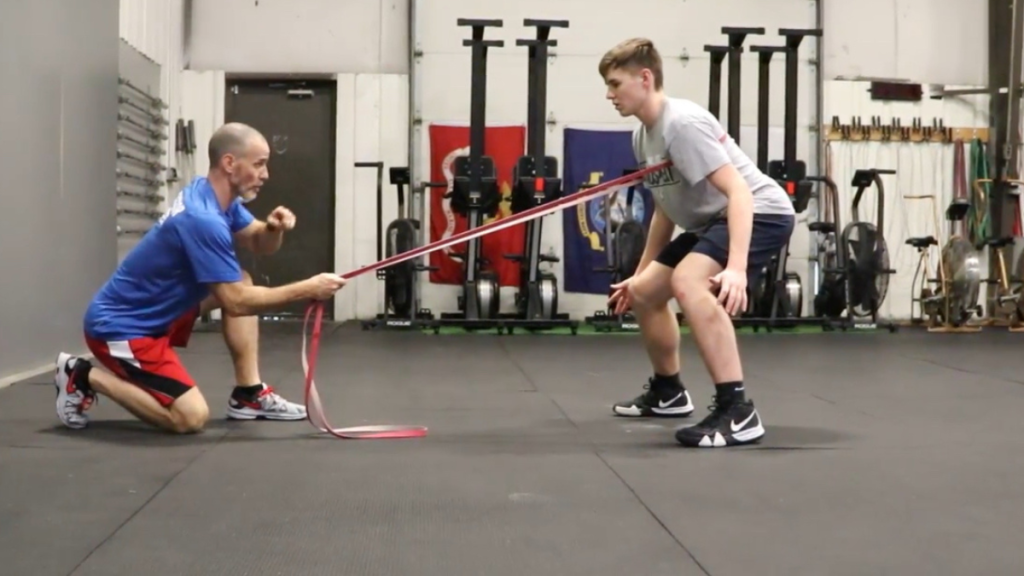
Lee has run 8- and 12-week mentorship programs for coaches who want to learn his methods. An application process exists because he learned the hard way: not everyone who pays actually shows up.
“I’ve gotten a lot of people that don’t get involved at all. They’ve paid the full price and they don’t do anything.”
The coaches who got the most out of his mentorship weren’t the most experienced. They were the ones who did the work. Lee mentioned a basketball academy in Indiana that turned a barn into a training facility. They did everything asked, asked questions constantly, and had the most success by far.
If you’re thinking through what model to run and want to see how another coach built their group program from scratch, the unlimited membership model for basketball training academies is worth reading before you set your pricing structure.
What coaches should take from Lee Taft’s career
When Brandon asked what one thing coaches should take from the conversation and apply tomorrow, Lee didn’t talk about footwork. He talked about questioning.
“Don’t assume that what you’re seeing on social media or what you’re reading is ultimately true until you’ve gone through the trials. Don’t be afraid to challenge and question what you’re currently seeing. Make it be proven that it’s actually factual and it works.”
Lee spent years watching athletes move before he published anything. He didn’t go in with a conclusion. He watched until patterns revealed themselves. That discipline separates coaches who build careers from coaches who borrow other people’s systems and wonder why they don’t stick.
The same logic applies to your sports performance business model. The group model worked for Lee. It might work for you. Run the trial, test the pricing, see if your athletes stay. Don’t assume something works until you’ve proved it in your own program.
The bottom line
Lee Taft closed his first facility at 26 because passion wasn’t enough. He went back to teaching, trained athletes out of his garage until 10 pm (essentially running a training business without a facility), built his client base while earning a steady income, and eventually went full time when the numbers made sense. He’s 60 years old and still coaching.
The through-line isn’t passion. It’s observation. Question what you see, test what you try, and build the model around what actually works for your athletes and your business.
If you’re building a sports performance program and want to see how CoachIQ handles group session scheduling, athlete communication, and payments in one place, book a free CoachIQ demo and see how it works for your business.
Full transcript
Episode intro: Lee Taft’s credentials
Brandon Evans (04:57.229)
while I was training. Cool. All right. Just want to make sure. Awesome. Well, I will start here. We’ll start in five, four, three, two, one. Welcome back to the Coach IQ podcast. I am your host, Brandon Evans, a fellow training business and facility owner. Today, I have a guest here who has been called one of the top athletic movement specialists in the world, Lee Taft, also known as the Speed Guy.
He has been training athletes and coaching coaches for over 35 years at this point. He revolutionized multi-directional speed training in 2003, has consulted with NBA teams like the Thunder and the Celtics, NFL teams like the Bengals and the Colts, MLB teams like the Phillies, and countless college programs. Spoken at the NFL Combine, the NBA Strength and Conditioning Workshop, and just conferences around the world. And now he’s mentored hundreds of coaches at this point who are now running their own programs.
Lee, quite an intro, welcome to the show.
Lee (05:54.671)
Thanks Brandon, I appreciate it. Looking forward to it.
The SUNY Cortland drill in 1987 that started everything
Brandon Evans (05:57.493)
Absolutely. So let’s get straight into it. I know Jay mentioned to me that you’ve owned some facilities, but before we get into that, I want to go back to, to the beginning. So you were a college basketball player, right? And you started questioning why your coaches gave confusing moving instructions. Walk me through that and how that became a 35 plus year career.
Lee (06:23.921)
Yeah, yeah, absolutely. yeah, I was playing, I can remember I was at a school called SUNY Cortland, Cortland State, and it’s part of the SUNY system in New York. It’s a very big, big conglomeration of colleges. so we were in pre-season and we had a guy who did our of our conditioning and stuff and they used to put you on the baseline and when they blew the whistle, you had to take off and run.
you know, run the lines and he blew the whistle and we took off and he blew the whistle real quick and he stopped us and said, go back, go back, you guys are doing it wrong. And we’re kind of like, all right, well, go back, do it again. He blew the whistle again. And he goes, guys, you’re doing it wrong. You’re stepping backwards. And I was a captain and I said, coach, what are you talking about? What do you mean we’re stepping backwards? He goes, lot of time you guys take off, you step backwards before you go forwards. I’m like, I’m thinking to myself, I’m like, no, we’re not, we’re just taking off. And so it got me thinking.
That was kind of the thing that spurred my interest in movement. And so over time, and it was really difficult back then, this would have been about 1987, and so it was hard to get, you know, couldn’t just go on YouTube and look it up real quick. So I started to watch film, and I started to pay attention to me. Like I watched how I was defending and moving.
and I wanted to see what he’s talking about and I noticed anytime I would accelerate quickly forward or laterally I would move a foot and I would reposition and take off really quick but it wasn’t Brandon and it wasn’t like I was thinking about it or I planned it you know what I mean it wasn’t like that it just happened then I started to study it and I watched and I watched old film of athletes well before me and well before there were you know movement coaches or or strength coaches
Watching movement across every sport and every age
Brandon Evans (08:07.437)
Right.
Lee (08:21.551)
And then I would study, you know, Michael Jordan, and then I would look at, was a phys ed teacher and I’d study my kids, you know, seven year olds, eight year olds. And I’m thinking, everybody’s doing that. Everybody’s repositioning their feet. And so that kind of spawned me onto, you know, trying to learn why. And so the thing that I think helped me is I didn’t have any preconceived notion. Like I didn’t go into it with the idea.
of, this is what’s happening and this is why. I just watched. I watched hundreds and hundreds of athletes and since then thousands over the years and I noticed patterns and I noticed when somebody had to react. So let’s say you and I were playing and all of a sudden the ball got tipped. Now it’s a 50-50 ball and our feet are going to get eventually into an acceleration position. And that’s what I started to study. And then how do we change direction and how do we react? And
That was really what kicked it off. And then so over the years, and I was fortunate enough to be a phys ed teacher, so I had all these students and a lot of them were athletes every single day. And so I started, you know, really taking a lot of notes and studying it. And then over time, as I became a strength coach and a movement coach, yeah, I just started to put together my own system of movement. And it was all based on human movement.
not any preconceived drill or pattern that somebody programmed. was just, what do we do at that moment when we have to react? And that’s kind of what started it all.
IMG Academy and knowing he was onto something
Brandon Evans (10:00.578)
Yeah. Yeah, that’s so cool. I find this stuff so interesting. Like I said, like one of my good friends, he sent me your stuff. name is Austin Shoemaker. So I hear him talk about all this stuff. I’m a basketball guy. don’t necessarily like, I’m not ever going to pretend I know that side of things. Like maybe I know a little bit from being friends with him, but I just find this stuff so interesting. And we’ll dive into a little bit more, but it sounds like this was kind of a gradual thing that.
Lee (10:12.827)
Yeah.
Lee (10:18.267)
Yeah.
Brandon Evans (10:28.972)
you figured out it was going to be your life’s work or was there a moment in that synopsis you just gave where you were like, okay, I’m going to do this forever.
Lee (10:38.501)
Yeah, it interests me right off in college. then, so I graduated college that fall. I went right into teaching phys ed and I was the head coach of three sports. I was a football, basketball and track. And two years into it, so some people may not realize, but when you become a teacher, you have five years to get your masters. And typically, when you coach, like somebody like me, I coach. So,
your days are long so what you end up doing is trying to get your masters in the evenings and whenever you can. I just didn’t want to do that so I left teaching after my second year and I went full time into my masters at a place called the United States Sports Academy in Alabama, Daphne, Alabama. From there I ended up getting a mentorship and I worked at Bulleterries Tennis Academy as a strength coach, speed coach, which is
Now IMG. Everybody knows it as IMG here in Florida. Back then it was a tennis academy and the top tennis players in the world, that’s where they trained. So I was there in 1991 as a speed coach, as a strength coach. And that was when I realized, okay, I’m onto something here because I’m seeing things differently than a lot of people were. Even people who had been into this field for a long, long time. Before me, I was a young.
young guy at that time. was 25 years old, 24 years old and I just, I listened to people talk. I listened to my mentors and others talk about multi-directional speed and it didn’t make sense to me. I’m like, yeah but that’s not what I’m seeing. What they’re telling me and what I’m seeing are two different things. So I just kept watching and again, you gotta realize back then I didn’t have access to video like we do now.
you and I click a button and we’re on this. Back then if we wanted to do this, you either had to do it on a phone call and it was recorded or we had to meet in person. I didn’t have access to quick video. So that was really what started it and once I got into the field, I just took years of studying movement. I watched everybody, any sport, any age, any ability and I started to collect the clues.
Building a movement system from scratch
Lee (13:04.101)
that I kept seeing. And then what was interesting is back then, like in the 80s and the early 90s, there was a ton of information on track and field. Like I studied Eastern block countries, know, the European sprint models and things like that, but I couldn’t find anything on multi-directional speed, very, very little. And then when I did see a little bit, again, it didn’t make sense to me. So I started to create my own system, my own model. So when I was working,
when I started working with my athletes, I could help them based on what their nervous system was naturally doing. And then technically, over time, I learned more about biomechanics and physics of movement. And then that’s how a lot of my systems were developed.
Industry reaction and early skeptics
Brandon Evans (13:52.356)
Yeah, that’s so cool. And let’s dive a little bit more into that. I’m always interested to hear how industries respond to things like that, to early adopters. And there’s, of course, the skeptics and everything. We see that in the basketball today. I don’t know how familiar you are with the constraint-slot approach. I’m sure you know plenty about it. But it’s the big thing on basketball, Instagram, and everything now.
Lee (14:12.196)
yeah, absolutely. Yeah.
Lee (14:18.725)
Yeah.
Brandon Evans (14:20.783)
And you see these drills and you know, people post them and everybody’s like, what is that? It’s like, it’s a clown drill when in reality there might be some science behind it. Maybe some people take it too far, but so my question is in 2003, you release groundbreaking athletic movement, right? And it changed how the industry thinks about speed training. So you introduced concepts like plyo step hip turn, lateral run. Again, I’m not going to explain those cause I’m not going to pretend I know.
Lee (14:26.79)
Yeah.
Lee (14:48.187)
Yeah. Yeah.
Brandon Evans (14:49.303)
What was the reaction when you first put those ideas out there? Did coaches immediately get it or were they like this guy’s whatever.
Football coaches called him nuts
Lee (14:58.437)
both. I’m telling you, Brandon, I got slammed by certain populations. Football coaches, you know, very dug into their trenches of how things are done. You you you heard the word Fault Step, right? And that’s a lot of where it came from is the football world. And those coaches pummeled me, went after me. And even prior to that coming out, because I used to
Brandon Evans (15:03.31)
You
Brandon Evans (15:16.184)
yeah.
Lee (15:27.121)
talk at clinics back in the 90s and when I talked about this stuff and they were like that’s crazy you can’t do that and I would show them live footage of it and I would even have them practice it. I spoke at the NFL combine one time and I had a group of football coaches in the crowd and they were just like you know kind of giving this guy’s nuts and then I did demo and I had them try it and they did it too they actually did the what I call a plyo step of the foot.
Brandon Evans (15:54.127)
You
Lee (15:56.333)
And I said, guys, you got to understand the nervous system and our body’s ability to protect itself. That’s where it stems from. It’s you know, the fighter flight mechanism is a real thing. isn’t, you know, it’s not a drill. It’s not made up. It’s what we do. We just have it now in a safer environment versus back when, you know, you were trying to protect your life, you know, trying to go get food. But so I had people that
wrote me emails and said this is the greatest thing I’ve heard in strength and conditioning because a lot of them said I would constantly see my athletes do these things and I was telling them not to do it because that’s what the industry was saying. But they’re like it didn’t feel right. So to have me come out with this in this video it was amazing the response. And then again I had the ones who were like this is crazy you’re going to
And then over time, those people who thought it was crazy came around and they started to witness it when they would watch a linebacker in a football game take a fault step or somebody else in a different sport take a fault step. I’m like, that’s why I named it a plyo step because it’s elastic. And I said, the body does it for a reason when you base on biomechanics and physics, like how our bodies aligned.
at the moment they recognize something. They see the play develop, now they got to react and go. Well, that’s what the body’s doing for it. So yeah, I got it from both sides. Luckily, I grew up in a coaching family. My dad was in it for 44 years, my brother, so I have a very thick skin and it didn’t bother me from the standpoint they were calling me nuts. It bothered me that they couldn’t see it.
Brandon Evans (17:34.255)
You
Lee (17:51.695)
that I’m thinking you’re going to hurt your own athletes. You’ve got to embrace this. But anyway, little by little, I think I’ve won a lot of them over.
Brandon’s high school false step memory
Brandon Evans (17:59.596)
It’s so funny just to hear you talk about that because I’m 26 and I played high school football, high school basketball. And I vividly remember our coach for football, he always, I played offensive line and he always, we had to run every time somebody took a false step. In our drills, he counted them up and at the end we had to do whatever at the end. And I’m just like, coach, it just feels so terrible. I can’t.
Lee (18:20.753)
Yeah.
Lee (18:25.706)
It does, yeah.
Brandon Evans (18:28.175)
I can’t move. But I did it. And then eventually in the game, I just did my own thing. But that’s besides the point. So it’s just funny to hear you talk about that. So for coaches listening on here on Coach IQ, we’re a sports business software. We help manage basketball academies, performance businesses, and things like that, which that’s what Jay’s on. That’s how we got connected. We just got onboarded for
Lee (18:30.157)
Exactly.
Lee (18:34.341)
That’s right, that’s right.
Lee (18:53.328)
Yeah.
Brandon Evans (18:56.227)
her basketball academy, Vision Basketball Academy, if anybody is looking for Denver basketball training. So I’d love for you to give a definition of multi-directional speed training and why is it important for athletes rather than just running in a straight line? I think a lot of coaches would be interested to hear.
Lee (19:01.829)
Yeah.
Multi-directional speed training defined
Lee (19:15.983)
Yeah, definitely. I appreciate that. so multi-directional speed training, obviously you have to consider all planes of movement. So forward, sideways, backwards, and any direction in between that. But another part to multi-directional speed training is pace. You you being in the basketball space as well, you understand that pace. Like you can’t just, if I’m a track athlete, I’m pretty much
Especially a sprinter you’re pretty much going at one speed. Okay, once you your goal is go as fast as possible And the reason is is you have no obstacles to change your direction, right? It’s just you’re competing against Others, but everybody’s running straight in multi-directional speed Not only are you trying to win the race to the ball to the space to the hoop to the goal to whatever? Whatever it is Sometimes it’s not the
it’s not always the fastest. Sometimes it’s the ability to change pace quickly, fake, and create some more space for yourself by a fake. So multi-directional speed not only covers the fact that you’re going in all these potential various directions, but it has to do with pace change, level changes, and things of that. it encompasses quite a bit, but that’s a baseline description.
Brandon Evans (20:41.423)
Yeah, I mean, I think you related it very well to basketball. Any basketball person has heard, you know, change of pace, change of level, all that stuff. It’s so important if you want to be a good mover on the basketball court, whether you have the ball in your hands or whether you don’t. All right. So thank you for that definition. I think there’d be a lot of coaches. just think that is very cool. So diving into maybe a little bit more of the business side of things, you’ve consulted with
Lee (20:57.657)
Exactly, yep.
How nine NBA teams found Lee Taft
Brandon Evans (21:11.063)
some of the biggest organizations in sports, Oklahoma City Thunder, Celtics, Clippers, Phillies, Penguins, college programs like Texas, Ole Miss. How did those relationships develop? How does a pro team find you and decide to bring you in?
Lee (21:26.703)
Yeah, you know, it starts with the first one. I was very fortunate to be in this space of, you know, multi-directional speed training. You know, that’s kind because there’s, as you know, there’s niches. There’s a niche of fitness. And then…
within that niche, there’s a niche of strength and conditioning. And then within that niche, there’s, you know, specific strength coaches, like a basketball strength coach or a hockey strength coach. My niche always was kind of this multi-directional speed. Well, what happened is I started to get asked to write articles and then I got asked to speak at events. And one of the bigger events is an event called Perform Better. And it’s an event that I’ve spoke at for over 20 years. And from that,
or at that event you’ll get like it’ll be in Chicago, it’ll be out west in California, be in their headquarters is actually in Rhode Island in Providence and down south. So when you speak at those events a lot of times you have major organizations that you have strength coaches from professional teams and college teams or whatever. So I’m doing this multi-directional concept
lecture next thing you know I you know I have organizations reaching out to me I think the first NBA team might have been Oklahoma actually and then I’ve hit like nine of them since then and multiple colleges and other pro teams and they just saw me and they said hey would you come in and do a workshop and that’s how it starts once it’s a fraternity right once you go and you do a good job they talk
Brandon Evans (22:57.082)
Really.
Lee (23:13.861)
And, you know, fortunately after a few of these, I got asked to speak at the Combine. And I’ve spoken at the Combine a couple times, two or three times. And now you’re in front of all of them. You’re in front of every NBA team. And so if it’s, the problem with the NBA and a lot of these professional teams is they have small windows when they can do these workshops, because their seasons are so long. And then when the seasons end,
Brandon Evans (23:40.378)
Yeah.
Lee (23:42.265)
Now they’re bringing in all the players that they’re potentially going to draft. They have that period of time. And then they got the summer leagues. So there’s just this small window. And many, many organizations have reached out to me and said, hey, we’d love to bring you in. And next thing you know, they’re like, we can’t, we got to be at this event or that event. So I’ve been fortunate enough to get nine of them, even though many others have asked. It’s just a matter of being able to get on it. And then once you’re in, then you’re in.
Several strength coaches that I’ve worked with have gone from different professional sports. One guy that I worked with, he was in the NBA. He went into professional soccer and then he came back to the NBA and I’ve worked with him at all three of those. so yeah, so that’s kind of how it starts. And once you get in it, if you do something that can help them and impact them, especially evaluations and assessments, they need that because that’s an important part of their job.
usually you have an opportunity to get hired.
Surreal moments: Iceland, South Korea, Japan, Spain
Brandon Evans (24:45.476)
Yeah, that’s so cool. So from all these experiences that you just mentioned, is there any of these that stand out where there was a moment where you’re like, I can’t believe that I’m doing this. Like I’m here right now.
Lee (24:57.551)
Yeah, well certainly any of the professional sports because I just am a fan of athletes and pro sports anyway. So when I had the opportunity to go speak at any of those that those were phenomenal. the ones the first time I’ve been to about nine countries and I’ve spoke at the first one was Iceland and then the second one was Finland.
Brandon Evans (25:01.925)
Yeah.
Lee (25:26.157)
And then I’ve been to Iceland three times, I’ve been to South Korea three times, I’ve been to Japan and Ireland and Spain and all over, and Slovenia. And so the first time I did that, I went to Iceland. It was like so surreal for me, so crazy. And I had all these, certainly I had the Basketball Federation coaches there, but I had.
Team handball, which they’re one of the best in the world at. Badminton coaches, which is a big sport in Europe. You know, other sports. those moments were like, you gotta be kidding me. You know, I’m just a phys ed teacher. You know what mean? I played college basketball in the States and I’m just a coach. And that’s why I always say, but I was in a niche that mattered to me.
it made a big difference in how I approached my teaching. And because of that, I started to find out, other people really cared about it too. They just didn’t know how to address it. And one thing you learn in business is you hire people that are better at you at certain things and use their knowledge versus trying to always figure everything out. Just go get people who are already good at it and let them teach you.
And fortunately I got in a niche that a lot of people wanted to know about and I’ve spent a lot of years studying it and so it opens doors for you. So yeah, that’s kind of how it happened.
The power of niching down
Brandon Evans (27:01.934)
Yeah, that’s so cool. And the thing with that, like you were in your niche and you weren’t afraid to put that information out there with the potential of being judged or, you know, somebody saying you were nuts or anything like that. especially now for coaches, always tell everybody like post what you have. Of course, if you have some research and proof behind it and some reason to believe why you are posting something, just get it out there.
Lee (27:13.274)
Brandon Evans (27:31.184)
Like you don’t know, you don’t know what can happen. Put your findings out there and you will probably learn more about what you’re posting about. Right? So.
Lee (27:34.395)
That’s right.
European research validates the plyo step
Lee (27:40.015)
That’s right. Well, one of the things that happened when I first started talking about this stuff in the later 80s and early 90s about these, especially the plyo stuff was the big one that kind of got its hooks in people. So what started to happen is I had somebody send me research from Europe. Some people did research on it. And back when I was doing it, I didn’t have access to force plates and, and, you know, technology like I just
Brandon Evans (27:50.714)
Yeah.
Lee (28:08.081)
I didn’t even think about that kind of stuff way back then. Well, this organization in Europe did a study on three different starting positions. They did a parallel stance start where you just step forward like your football coaches were trying to get you to do. Don’t take a false step. And then they did a staggered start like a of like a standing, you know, like you’re going to race someone.
and then they did what they call the paradoxical step, which I call a plyo step. They tested all three of them. And without a doubt, the plyo step was the most impactful of all of them. And matter of fact, they studied that the parallel stance where you just move forward, they couldn’t even get through it because every time they said, go, the person would do a plyo step and take off. So the impulse, the…
the reaction time, the force output, everything was greater in the plyo step. And I didn’t need all that stuff to know that that was the better, more accurate footwork because people did it naturally. But the fact that it came out backed what I was saying for years and years and then more research has come out since then. So yeah, it’s kind of cool to see.
Brandon Evans (29:29.624)
Yeah, you’re probably like, hey guys, I’ve been saying this. So you mentioned a little bit about the business side of things. Let’s dive in a little bit more to that. I think because there’s a lot of coaches listening that can really relate to this regardless of if they’re a performance coach or baseball. Correct me if I’m wrong, but you opened your first facility. It’s called the Speed Academy at 26.
Opening the Speed Academy at 26
Lee (29:33.573)
I told you so!
Lee (29:44.625)
Yeah.
Lee (29:57.327)
Yeah, yeah.
Brandon Evans (29:59.288)
You said that you were blinded by passion and you learned business the hard way. Talk about that. What were those early days like? What was the hard way to learn things?
Six months in: passion isn’t enough without the numbers
Lee (30:05.179)
Sure did.
Lee (30:09.073)
Yeah. So this was in 1994. I had left the bulleterries. I went to University of Kentucky for a little bit. I was a strength coach for their tennis program because that was the arena I was in. But on the side, I was training other athletes and I got kind of got the passion for like this model of training and what it was, I was kind of like saying, let’s take this physical education.
and turn it into a program where people can get higher levels of that, almost like advanced physical literacy and physical movement. So what we did is I moved back, my wife, we were married around that age, and we moved back to New York. And we had the idea, let’s go try this. We had no money, no idea how to run a business, but I was so passionate about the training.
And I knew how to do that, I was a phys ed teacher. I didn’t have any business courses. I didn’t have any idea. So we ended up finding this facility that was like 4,000 square feet. Here, of course, we go that big for the first facility. Had no idea. And I actually had a family member that had a little bit of a business background help me negotiate to get in. So we go in and we got the cost, the rent.
Brandon Evans (31:19.771)
you
Lee (31:34.341)
down pretty low but what I didn’t know it was only for six months and then it was going jacked right back up to where it was and beyond. So anyway we go in there and I we borrowed money and got in got it going it was going well quickly people were like wow this is a really neat concept so I started to pick up teams like I’d get softball teams and volleyball teams and basketball and then individuals of course and I did some adult training as well.
And then I was doing my speed clinic series. So I would go to schools or colleges and do work with their teams. And then all of a sudden, six months is up and the landlord says, well, this is your price down. Like we can’t afford that. We can’t use out. Sorry. And so we had to close that fast. And it was heartbreaking because people loved it. It was going really well. But it was a great lesson for us because you can’t let your
passion override the fact that you have to have solid numbers. Like you got to understand your financial abilities to withstand opening a business. It isn’t just like, okay, I got enough money to open the doors. Well, you’re going to have some lean months and you got to be able to handle that. And so we had no idea. Well, we learned a lot from that. So since then we opened up like probably four other places in different.
Brandon Evans (32:53.232)
Yeah.
Brandon Evans (33:00.912)
Really?
Back to teaching, building the business from a garage
Lee (33:01.871)
different parts of New York and then back in Indiana. So what happened was I went back into teaching because it gave us a chance to get insurance and make a solid income but I never stopped training. I never stopped my business. I used to train out of my garage. I set my garage up like a training facility. So I went back into teaching for about five, six years. was a head football coach, head
track coach, was a head strength coach for the school and I helped with basketball and all this. But on the side when I came home I ran my business and I was training a lot. I was training about 40 athletes and I did it on the weekends all day and the nights I would train till 9 o’clock, 10 o’clock at night after being I’d get up at 430 in the morning and get to the school and open the weight room in the morning to train my then teach and then coach and then so it was a lot. Well what happened is
My business just kept growing and I finally said to my wife, I’m this is really what I want to do. Let’s just go for it. So I resigned from teaching. I found a thousand square foot little space and I opened up the business. Within one year, we had about 150 athletes. So the model was working. We grew out of that place and the next year I found a place that was 3,200 square feet and that went.
for about a year and a half and we grew out of that. Next thing you know, we’re in 6,000 square feet and that took off. I actually had an assistant and some other staff that I was able to hire. So what I didn’t know in that very first facility is actually how to manage it. I didn’t understand it. Well, when I had the opportunity to grow my business while I was earning a living being a teacher.
it allowed me to make mistakes or if something didn’t work, it didn’t matter because I had income. But I’m pretty risky. I’m not afraid to take a chance. And once I knew I had a lot of interest and when I went full time and my hours were able to open up, I could get more people, it took off like that. And once it took off, it was pretty much uphill. From there, it just climbed.
The group model: 10 to 12 athletes per session
Brandon Evans (35:23.889)
That’s such a cool story. What was a overview of that model that worked so well for you?
Lee (35:34.511)
Yeah, so this is funny. I have this conversation with Jay a lot too because she’s getting into the business sector, she is in the business sector, is I’m like, you know, in my field in fitness, what was always common is one-on-one. You do personal training one-on-one. I’m like, that’s a tough business model unless you’re able to charge enough. I have a friend that lives out in kind of Silicon Valley out.
Brandon Evans (35:41.465)
Yeah, right.
Lee (36:02.641)
you know, we’re with Google and all those big companies, he could charge $300 an hour and get it easily. I’m like, yeah, you could do three sessions and have a great day, right? Most of us can’t do that. You’re going to work 10, 11 hours, 12 hours, and to come back day to day, that’s brutal on you. Just mentally it’s tough, let alone physical. So my model from day one, even that first facility that I opened up in 94, I went…
Brandon Evans (36:09.937)
You’re good.
Lee (36:30.969)
almost like based on a phys ed model is I had 10 to 12 athletes and my, you you’re not actually working at all 10 or 12 at the exact same time. You know, it’s kind of like, you know, half the athletes are doing a skill and you’re evaluating and then the next half while they’re resting and then the next, know. And so we built a model around that and it afforded me to be able to have people long term. Like some of the
athletes I had. I had for like 14 years. And the reason is, is they didn’t have to pay very much because I had 10 to 12 athletes making up that hour. So my hourly rate was tremendous, but each person wasn’t paying that much, meaning they would stay long term as where if I ever did privates, I had to charge a lot.
and people couldn’t do it for very long, just couldn’t afford it. And so that was a successful model. And the great thing is, and this is what I like with basketball, when I do basketball training or anything, I always try to do it in small groups because you can teach them decision making, which is a critical part of the game of basketball, and then you can relate contextually the footwork, why it didn’t work when they…
did a stride stop or why pivoting out of pressure is important in doing this. I can’t do that one on one very well. And the same thing in the speed world. You know, other than sprinting, because sprinting I don’t really necessarily need a person, but we’re doing multi-directional speed. I need my athletes to learn to react to another human body and make a decision off that. And then my teaching is based off the decisions they made in the footwork.
so we can teach them things as escaping space and attacking space and corralling an athlete and things of that nature. And so the model worked. And so when I started doing consulting for other people, I’d say, you have to learn how to work with groups. And they’re like, yeah, but I’m a person, I don’t know how to do that. I said, it’s not very hard. And so I would teach them how to do that. And that’s really been the most successful model out there is groups, teams.
Lee (38:53.935)
because otherwise it’s hard to pay for your facility if you’re not making enough income off of groups.
Why group training beats one-on-one for athlete development
Brandon Evans (39:00.326)
Yes, you’re speaking music to my ears right now 100 % with the performance side and the basketball side because I mean, hear it from Austin as well. He said the same thing you do when it comes to the performance because they have their group classes, know, and he’s like, I need them to be able to compete with each other within the context of whatever skill they are working on that day, like whether it’s lateral or whatever he does over there. And then same thing with basketball.
Lee (39:05.169)
Hehehehe
Lee (39:26.864)
Yeah, yeah.
Brandon Evans (39:29.36)
with the group part of it, I need to see some sort of competition happening so I can actually see what the kids weaknesses are when there’s somebody in front of them. Because I mean, I’m sure you’ve seen the kids that they can do all the work and the footwork and stuff on air perfectly fine. But the moment they get somebody in front of them, it all goes out the window, right? Like they don’t have it anymore.
Lee (39:39.782)
That’s right.
Lee (39:51.675)
That’s right. Yup.
Brandon Evans (39:54.959)
I just think it’s personally a win-win for everybody because I I talk to coaches all the time and I hear it often is like, the one-on-one, I love it. Like it’s, it’s what separates us. Like other people, otherwise people aren’t going to want to come like, you know, all these things. But I think it’s just so much better for the athletes. First of all, second of all, the business, if you want to be able to do it on a, on a scale where you have your own facility, you can make that space for the kids.
Lee (40:16.923)
Yep.
Brandon Evans (40:24.518)
and you want to impact more kids, it’s just, it’s non-negotiable in my opinion. Like I’m not saying you can’t do one-on-ones off to the side, but the core of it, in my opinion, it needs to be groups for a lot of reasons. I’m a hundred percent, it’s just fine. What years were this when you were figuring this all out? What years was that?
Lee (40:29.561)
Yeah, yeah. Right.
Lee (40:39.535)
Yeah, exactly.
Lee (40:50.713)
Yeah, well in the 90s and through the early 2000s and stuff,
Brandon Evans (40:52.997)
Yeah, yeah.
Yeah, here we are in 2026 and we’re still trying to move people over to that group model. But I just think it’s a part of becoming a quality coach and trainer that is independent. You’re going to have to do your one-on-ones. You’re going to have to build relationships with people and eventually you can move towards that group model. So I think it’s just a part of growing your program. So go ahead. No, you’re good.
Lee (41:01.85)
I know.
What to tell parents who insist on private sessions
Lee (41:19.301)
Yeah, that’s right. Well, you know, I don’t mean to interrupt you, but on that point, I think this is important for your listeners to understand. When I consult with coaches who are struggling, they’re like, yeah, but the parents aren’t going to like it. They want their kid one on one. What I personally say to parents, and because I still have some one on one now, but it’s only because of timing. It just worked that way. That was the only way that it worked.
But what we try to explain and what I have said and what I’ve even told like Jay to tell parents and others, I say to the parent, so you don’t really want what’s best for your child, you just want one on one. And that confuses them. And I’m like, research and my experience, undebatable, has proven groups.
improve the performance far better than one-on-one and here’s why. And then we go through the prediction model, which is a model of how we as humans make decisions on a movement and it has to do with your memory. So if you and I are doing drills on our own and we’re working on inside out, inside out, crossover and we’re nailing it,
then all of a sudden I get a good defender in front of me and I can’t do it. That’s an example of I wasn’t trained to recall a footwork by a defender and instantaneously read where space has been created. So when I don’t have that opportunity, I really don’t grow as a decision maker. I just get good at doing these
rote memory type drills and like you mentioned earlier some people get great at these highlight dribbling drills but they can’t do it in a game or they can’t because they don’t you know and it’s funny because i always said to my kids i had two daughters and and my son who’s high school they handled the ball way better than i did but i could naturally score because i grew up playing in the streets in new york and and we had to play against
Brandon Evans (43:23.608)
yeah.
Lee (43:43.669)
you know, players all the time and you had to learn how to score the ball and we played outside and you had to make, you know, decisions or you kicked off the court and you play with older people. So I learned how to score the ball no matter what, runners and jumpers and floaters and fadeaways and up and unders because I’m 5’10 and I’m playing against, you know, good players. I didn’t do all the drill work and stuff. Now, I did some on my own when I couldn’t find somebody to play with, but that wasn’t what we were based on.
Brandon Evans (44:10.364)
course.
Lee (44:12.761)
And so what I’m telling parents, I’m like, you’re actually hurting the development of your child by not allowing them to compete with and against other players because ultimately that’s the sport, whether it’s soccer, lacrosse, basketball, know, whatever. And so, yeah, so that’s an important aspect to it.
Brandon Evans (44:34.418)
that is extremely important. I’m glad you said that 100 % because it’s, I mean, it’s just a common misconception. Like you look at the price, an individual price is always more expensive than a group. I don’t think I’ve ever seen somebody charge less. And that’s, it’s just because of one, the person’s time reserved for one kid, two, whatever gym rental, whether it’s your facility or you’re renting out another facility. And once you get to that point, plus the price of the knowledge of the trainer,
like you’re at $7,500 and that trainer might only make half of that if that like it’s and of course you as a parent who may not know you might think oh just the private attention is better 100 % but for all the reasons that you just said it’s just simply not like at the end of the day it’s it’s just not now are is your facility still open or have you since shut that down?
Lee (45:09.947)
That’s right.
Lee (45:20.079)
Yeah.
Lee (45:24.741)
Yeah.
Lee’s current work: training from his Florida garage
Lee (45:34.191)
Yeah, I train out of my garage, which is basically a facility. Now I’ve got everything in there that I need. That’s where I train athletes. that’s, I don’t do like a ton of it. It’s not like a full day of stuff I have because I do other things. But that’s, yeah, that’s what it is now here in Florida. In Florida, I have not opened a separate facility other than my own place. Yeah.
Brandon Evans (45:39.109)
Okay.
Brandon Evans (46:00.893)
Very cool. so have you moved more so onto the mentoring coaches side of things, the consulting? Is that your main focus right now?
Lee (46:12.143)
Yeah, yeah, that’s, I do a lot of, it’ll start, cause I just finished coaching basketball. So we’ll do some consulting and whether it be online or going in person and traveling and doing stuff like that. yeah, yeah.
Brandon Evans (46:17.448)
Right.
What Lee looks for in coaches he’ll mentor
Brandon Evans (46:27.859)
I think that’s so cool and something I’m so intrigued about it. It’s something I’m considering myself. Now that I’ve opened my gym and everything, what do you look for in a coach that you want to invest in? I know I saw on your website you have maybe like, is it like an application form for that?
Lee (46:34.0)
Yeah, good.
Lee (46:46.395)
for programs, for mentorship programs and stuff.
Brandon Evans (46:49.667)
Yeah, like, if a coach wants to work with you, what do you look for in that coach to where you’re going to accept him in because I’m sure you don’t just take in everybody.
Lee (46:57.431)
Yeah, yeah, so when we do our, we haven’t done one in a little bit here, but when we do our like our regular eight week or we’ve done 12 week mentorship programs, we’re actually teaching classes for certain months. We put it out there and we put out an application and if, you know, it’s funny because I’ve learned at first we used to just accept anybody that wanted to do it. I didn’t know any better, you know, when I did it.
Brandon Evans (47:09.053)
Okay.
Brandon Evans (47:20.008)
Yeah.
Lee (47:21.893)
And then what happens is I’ve gotten a lot of people over the years that don’t get involved at all. Like they’ve paid, they’ve paid the full price and they don’t get involved. don’t do anything. don’t, you know, and it frustrates me because I’m not interested in just making the money off. And that’s not my interest at all. Matter of I’ve shut down many of those because I’m like, all right, guys, you’re not going to do it. We’re done. It’s over. not, I’m, I’m doing it because I want to make a difference.
Brandon Evans (47:36.627)
course.
Brandon Evans (47:48.819)
Right.
Lee (47:50.965)
And so, so what, there’s a, there’s a, you’re probably familiar with the basketball academy in, in Indiana that they have a barn and they turn the barn into, yup, yup. And well, they were one of our, in one of our mentorships and did absolutely everything we said, everything, always had questions, were always in the forum.
Brandon Evans (48:04.211)
GTA. Yep.
Brandon Evans (48:10.931)
Really.
Lee (48:18.193)
ask questions. If I said these are the things you got to get done by the end of the week and I want to say BAM! Had it done and they were by far the most successful that we had. I’ve had a couple others that did some stuff and went on but several just didn’t do anything. They didn’t get any success and I’m like it makes me feel bad because like you paid but you’re not going to do the work. I’m like I’m not doing it just to make money off it. mean it’s a so yeah when when when people invest
and they actually invest time and they do it, that’s what we’re looking for. So I want to know that they’re going to be involved in, even if they have no experience and they probably shouldn’t be in a class like that, it’s okay because I can help them at whatever level they’re at.
Brandon Evans (49:03.879)
Right. Yeah. I think that’s, that’s so important too. Cause even, even for me and my gym with our kids, we just like last week changed to fully application based to where you have to fill out a pretty decent form in order to even have us consider you. Then you got to get on a call with us, which is about 30 to 45 minutes. Then you have to show up for your trial session and only then will we invite you to be at our gym because
It’s the same exact concept is that you have with your consulting is, what I’ve gotten to the point with, with the kids at the gym is like, don’t, I don’t want to, like, I want to coach and I want to train you and I want my trainers to want to train you. But if you, if you just don’t want to be involved, if you don’t want to take advantage of it, I don’t, I don’t want the money. Like I just simply do not want the money. So do you have like an application process that
Lee (49:54.513)
Yeah, yeah.
Brandon Evans (50:01.947)
somebody has to fill out to get accepted into your program like that, or what does that look like?
Lee (50:07.449)
For training I do not now because what I what what I do a lot of now Brandon is I get For some reason I don’t know it started many years ago, and it’s it’s really big here I get a lot of injured athletes I get athletes coming off ACLs and Achilles tendon ruptures and I had a Tommy John athlete and I and tendonitis knee tendonitis and
Brandon Evans (50:10.259)
Okay.
Lee (50:36.753)
I had a young, as he was a young basketball player, he was 10 years old, had a complete fracture in his kneecap and stuff. So I get those athletes who are trying to get back to playing. And what happens is, you know, most of them, because of their time and schedules, I might get them once a week. So I have to, give them homework and stuff like that. So I don’t have the same model that I did before.
Brandon Evans (50:59.187)
Mm-hmm.
Brandon Evans (51:02.791)
Right.
Lee (51:03.777)
more than anything because of just schedules and my time especially as a basketball coach. So I spend a lot of time now just trying to get athletes back to being able to play. I have a girl that I, she tore her ACL last year and we’ve got her back now. She’s pretty much back full 100%. She’s a sprinter. She should be a college level sprinter and
We spent a lot of months just trying to get her to be able to actually skip again and then, you know, progress her through. So that’s a lot of what I do now.
What keeps Lee going at 60
Brandon Evans (51:39.699)
Nice. going touching on where you’re at right now, you’ve been doing this for 35 plus years and you’ve gone over everything you’ve done. You probably could have retired by now. What keeps you going still?
Lee (51:55.505)
You know, it’s funny. It’s you know, my dad I remember he retired when he was 66 years old and I don’t think he wanted to retire I think he kind of the school was ready to move on he ended up as a principal Towards the end and stuff and he wasn’t really right and I’m kind of like that mean, I’m 60 years old now and I still have so much energy and I so much to learn and You know, the field is always evolving and
Brandon Evans (52:07.281)
Okay.
Lee (52:25.221)
I just like the impact that I get from learning and then hopefully impacting others. And so I just don’t, I don’t know what I would do to be honest with you. I’m a gym rat, I’d probably end up in your gym shooting baskets in the corner or something. I just like being around it. I’m a coach inside and out and it’s fun for me to be around it. So I really haven’t ever considered even retirement.
Brandon Evans (52:35.213)
Hahaha
Brandon Evans (52:39.763)
So funny.
Lee (52:53.775)
You know, and I’m sure sometimes it’ll happen. It’s funny, people who do, they say, Lee, it just kind of hits you all of sudden. You’re like, one day you wake up and you’re kind of like, I just don’t want to do that anymore. And you say, I’m not there and I don’t even feel like I’m close to it right now. yeah, so that’s kind of, yeah. Yeah. You know, one of my things that keeps me going, I’ve always wanted to coach like small college basketball.
Brandon Evans (53:11.081)
good, that’s great to hear. That’s great to hear, it’s simple answer.
Brandon Evans (53:23.709)
Really?
Lee (53:23.813)
Just like small college, I don’t want to recruit all over the country. want to go, like, I would have loved to coach at a small division three in Indiana, just coach out of Indian, recruit out of Indianapolis, you know, and do that. And just never got the chance to do it, but that’s always been something that I’ve wanted to do.
Brandon Evans (53:44.979)
Sounds like you still got more to accomplish and more to do. So I got one last question before you and then we’ll sign off here. For those coaches listening, regardless of whatever sport they may coach, if they take one thing from this conversation, just hearing you talk and apply it tomorrow, what would that be?
Lee (53:47.705)
Hahaha
One thing every coach should apply tomorrow
Lee (54:05.679)
Yeah, don’t assume that what you’re seeing on social media or what you’re reading or whatever is ultimately true until you’ve gone through the trials with it. And what I mean is in my area of expertise as multi-directional speed, I went many, many years of just watching and seeing things happen.
and seeing movement occur. So don’t, you know, just because maybe your mentor told you something, be respectful, but kind of in the back of your head, question it until it’s proven to be true. And when I had my staff, I used to tell them all the time, I’m like, guys, this is what I know. It doesn’t mean I have all the answers, but this is what I know. So question it, challenge me, and let’s get, in we used to have staff meetings every Wednesday.
and it was about different concepts and principles of training. And so I always try to tell younger coaches or older coaches, getting into any profession of coaching, is don’t be afraid to challenge into question what you’re currently seeing. Don’t just take it as that’s the written rule and challenge it and see. Make it be proven that it’s actually factual and it works. And that’s served me really well and it’s allowed me to change my mind.
when it was necessary.
Brandon Evans (55:33.318)
Absolutely. is fantastic advice from somebody who’s been in the field for quite a while. Well, Lee, thank you for coming on. This has been an incredible talk here. 35 years of experience revolutionizing how we think about speed training, working with the best organizations in the world, and now spending your time focusing on that next generation of coaches. Where can people find you and connect with your work?
Lee (55:43.985)
Thank you.
Lee (55:59.281)
Well thank you, I appreciate it. First of all, thanks and you’re doing an amazing job Brandon. It’s something hopefully more coaches take advantage of the things you’re doing. But yeah, social media, they can pretty much find me at Lee Taft. I’m pretty active, I try to really get conversation going and talk about topics. So anything at Lee Taft and if they go to LeeTaft.com, it’s kind of our mothership. They can find any information they want there.
pretty available. If they reach out to me, I do my best to get back to everybody. So thank you for letting me share that.
Brandon Evans (56:33.716)
Absolutely everybody go follow Lee of course as always I’ll put everything on the screen here and in the description as well If you want to learn a little something about movement, that’s the guy to learn from thank you guys for listening Lee Thank you for coming on
Lee (56:47.291)
Thanks Brandon, appreciate it.
Brandon Evans (56:48.917)
Absolutely.
