

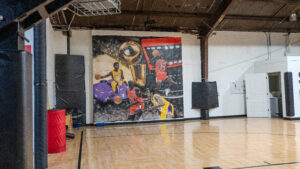
If you’re figuring out how to run a basketball training academy, Brandon Evans’ story is worth studying. He didn’t build Pro Standard the way most coaches imagine it — no polished facility, no climate control, no safety net. Just a 120-year-old warehouse in Fort Wayne, Indiana, sport court tiles that turned to ice in a humid summer, and a five-to-six month deadline to get it open.
Three years later, 40 to 60 athletes train there every week. The business runs on unlimited memberships starting at $250 a month. No-shows are rare. The schedule mostly books itself.
Here’s how to run a basketball training academy the way he does.
How a basketball training academy membership model actually works
Pro Standard runs two tiers. Standard is the anchor — unlimited access to all classes, shooting labs, camps, weekend leagues, and open gyms for $250 per month. Pay three months ahead and it drops to $230. Six months: $210. Twelve months: $175.
“Even the $250 a month — we focus a lot on providing as much value as we possibly can, to where they feel like that $250 is just a steal,” Brandon said.
The math works for athletes and families because they can train 20, 30, or 40 hours a week for a flat fee. At an hourly rate, that’s exponentially more expensive. The model came from a real problem: too many families were saying they wanted to train three or four times a week but couldn’t afford it at per-session pricing.
“We were charging like crazy amounts for some families. And I’m like — I don’t know.”
The switch to unlimited changed that math. For athletes who live far or play multiple sports, there’s a Credit membership — five sessions for $125, nine for $200. But Brandon pushes the Standard every time because frequency is what gets players better.
How does a trial session actually convert?
Anyone who finds Pro Standard through Instagram or the website sees one button: Book a trial class. The trial is $10.
It used to be free. Brandon changed it after watching free trial no-show rates stay high no matter what he tried — calls, texts, reminders. The moment $10 went on file, the dynamic shifted.
“They already have skin in the game. They’re invested. Even $10. Like, you put your card in and it’s on file now. You are invested.”
But the $10 alone didn’t fix it. The form behind the button routes families automatically to the right class based on age and skill level. A 10-year-old beginner goes to Foundations. An advanced 10-year-old goes to Rising Stars. No waiting for a callback. The booking happens in minutes.
The other piece: athletes can only book a trial three to four days out. No booking a week ahead. The closer the training is to the moment they decided they wanted it, the higher the chance they show up.
CoachIQ’s scheduling tools handle the routing, reminders, and booking flow that makes this system run without manual work from the staff. After the trial, Brandon’s manager Chase calls the next morning — not the same day — and walks the family through membership options.
Why individual sessions don’t work in a basketball training academy
Pro Standard doesn’t offer individual sessions. Not for regular athletes. This was a deliberate shift — one Brandon calls the biggest operational improvement he made.
“I don’t believe in individual workouts as a concept for getting people better. The only time we do individual work is because of a weird Indiana rule — in season you can’t do workouts with other IHSAA participants.”
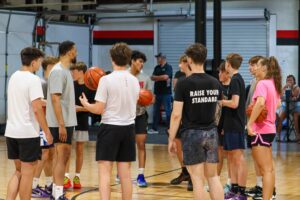
The argument against individual training isn’t just financial. Basketball is a reactive sport. You make reads, you respond to defenders, you move based on what other players are doing. None of that happens in a one-on-one session.
“You have nothing to react to. No stimulus.”
And the economics make it worse, not better. Individual training is expensive because you’re paying for both the trainer’s time and the gym time. That cost doesn’t translate to better results.
“All the major decisions that have been financially rewarding as a business have been rewarding for the players as well,” host Mitch Kersh noted. That’s the point — group training is better development and a better business model. For more on why the numbers work, see group training vs individual sessions: the economics.

What he’s automated (and why it made things more personal, not less)
Brandon spent the last six to eight months building out his automation stack. The result: fewer no-shows, faster conversions, and a better athlete experience across the board.
The automation that made the biggest immediate difference was session reminders. CoachIQ sends a text a few hours before every session with a reschedule link built in. Last-minute cancellation texts from parents went from constant to almost never.
“Before, every coach has had that text — ‘Hey coach, we’re not going to be there. Sorry, can we reschedule?’ We don’t get that anymore. Ever.”
On the membership side, athletes on three-, six-, and 12-month commitments get automated email sequences: 30 days to expire, 15 days, renewal options. Brandon said he gets regular compliments on these emails.
Then there’s the welcome sequence — 12 emails that go to anyone who signs up for anything through CoachIQ. Packed with value for parents and families: what to expect, how to use the gym, what players can do at home.
When someone buys a membership, they also get access to a full online training vault built inside CoachIQ — more content than they’ll ever read, but it signals that this isn’t just a gym. It’s a system.
CoachIQ’s messaging and email tools handle the reminders and sequences that make this work without the staff managing it manually. For more on how automation translates across a coaching business, see how Mike Shaughnessy runs his coaching business on automation.
The money and the mission aren’t opposites
One thing Brandon pushed back on directly: the idea that running a profitable basketball training academy means you’re not in it for the players.
“You can 100% make money while doing what’s best for the kids. It’s not a one-to-one tradeoff. I wouldn’t be able to hire on a team of seven trainers if we didn’t make money. Like — bills have to be paid.”
He didn’t pay himself for the first two years while building the gym. The facility came first. The athlete experience came first. And now that the business is sustainable, he can deliver more to the players, not less.
That’s the model. And it’s one that coaches at every level can build toward — starting with the trial process, the membership structure, and the automations that let you show up to coach instead of managing logistics.
If you want to learn how to run a basketball training academy with this kind of infrastructure, CoachIQ is built for exactly this kind of operation.
Full Episode Transcript
The following is a lightly edited transcript of the episode above.
▶ Click to expand full transcript
Russell: Welcome back to the Coach IQ podcast. I’m your host, Mitchell Kersh, and we are here today with Brandon Evans of Prostandard Basketball Academy. Welcome. Thanks for being here, man.
Brandon: Absolutely. I appreciate you having me. I’m excited for this. So you’re you’re coming you’re calling in from Fort Wayne, Indiana. Would love for you to paint a picture. What’s going on up in Fort Wayne?
Russell: It’s there’s probably about 250,000 people here, I think. Not really well known. It’s probably like two hours north of Indie. Indianapolis. That’s major landmark. It’s It’s probably one of the bigger cities in in Indiana. Still not too many people here, but I I just moved here three years ago. Yeah, three years ago in like a month. I don’t fully know what’s going on here. no, it’s it’s one of those towns that like it has everything. it has a downtown. It has your all your areas of a bigger city, but it’s just not at that scale. if I wanted to go downtown and have like a a downtown day, like I could. It has like tallish buildings. Nothing crazy, but it’s it’s a nice it’s a small town feel, but it’s not necessarily a small town,. for sure. And Indiana, the stereotype is a basketball state, obviously, with the Pacers doing pretty well. I’m ass sure the the energy is up over there. for what you do, I assume it’s a it’s a good spot. Yeah. Yeah. There’s there’s so many kids here that play basketball. There’s so many just people that want to be involved in the sport. Obviously, like you said, with the Pacers, like that was big. We’re getting a bunch of kids that have never played before that are I want to play now. like, “All right, got something for you.” But yeah, it’s it’s basketball definitely runs deep here.
Brandon: I love it.
Russell: You’re gonna see a bunch of kids releasing the ball like Hallebertton soon.
Brandon: Oh yeah, we already do.
Russell: I already do.
Brandon: I love it. I love it. So try to try to fix it and they’re like, “That’s how Tyrese shoots.”
Russell: Okay.
Brandon: Hey, if the ball goes in, man, we’re cool with it.
Russell: Yeah, I guess.
Brandon: All right. So over at Pro Standard, I walk in the doors. What am I seeing? this from the outside isn’t going to look at all like a regular gym. like when we got this place, we didn’t really have much of a choice as far as locations because there’s nothing really here that has high ceilings and the space we need. we took a super old warehouse, like a it’s like 120 years old, and turned it into a gym. I got super lucky. My landlord, he runs a business attached to this facility, and he spent a ton of time cleaning this place up, like patching up all the concrete, putting in a bunch of walls, like giving me electrical outlets wherever I wanted. I got super super lucky. If you’re out there trying to think of or trying to find a spot, don’t expect that. That is not that is not normal for the landlord to cater to your every need. I got lucky. But you’ll see a presentable old warehouse. Like we took a lot of time to make this feel homey, but of course you have all the aspects of a warehouse like super dusty if we don’t keep up with it like your garage doors. just it’s it’s a presentable warehouse and it works and we try to make it as homey as possible. I think you are living the dream of a lot of trainers. I think most private trainers have that goal of opening up their own facility,
Russell: But they don’t know the the nitty-gritty details of it all. when you got the facility, great that the landlord was catering to your needs, but how’d you go about things like picking flooring, hoops, lighting, where did you get that type of information? I I knew that we weren’t going to have like your traditional full court. I was looking for I’m sure everybody’s seen like those sport court tiles, just like the square ones, and you click them together. I was reaching out to manufacturers for those and see if they could get installed or delivered or whatever. I just typed in Sport Cord on Google and called up a bunch of places. and we were on such a tight schedule because the facility we worked out of before it was a church and they eventually had to sell their building. So like we had like five, six months to to find a spot, get everything and move in and all that stuff, which five or six months sounds like a long time, but when you’re doing technology like that, it is absolutely not. I was stressed out. but one of the sport court manufacturers, I called the guy, he said they have the court and he’s like, “Oh, we also have hoops and all the wall pads and all this stuff as well.” And I was like, “All right, let’s do it.” Because every every other place, every other sport manufacturer, they were running like four or five months ahead or behind schedule as far as when they could get in. And I didn’t find a spot until, threeish months before we had to be in here. just nothing came up. Everything was too expensive or just wouldn’t fit for our needs. Landlord wouldn’t let us turned into a gym, all that stuff. But this spot came up and that was the only place that was able to get our stuff in. Big flooring mistake. That sport core flooring did not work. it it’s made for your your new facilities that are insulated and have climate control and all that fun stuff. This does not. just just because of like it’s great stuff under the right conditions. Like when it was the right conditions out, it was great. But like if it got super humid, which it does in Indiana in the summers, it was like the floor absorbed it all and it was like running on ice. It helped me personally as a trainer because I now I had to manage a group of eight to 10 and figure out how to run a workout where they’re not moving around very much. So like I got super creative with a bunch of bunch of things like that. But I had to get some other flooring. It’s just made out it’s similar to sport cord. It’s just made out of a different material and works fine. But yeah, that process can go differently for a lot of people. It’s not very fun. it’s exciting, but nerve-wracking, scary, and very expensive. But yeah, I got I got lucky with that whole process.
Brandon: But you pulled it off. And I don’t think most people in your scenario would have any insight into that, Like at the start, you’re a basketball coach, You said you’re working out of a church, you have your clientele, most of your focus is on the sport, and we take for granted the the the courts that we’re in and everything set up. like that’s not your expertise. But if you want to grow and scale a business and and work in that private setting, you have to become a facility manager on top of being a basketball coach as well. And I think that’s something, fast forward to where you’re at now that you’ve really excelled in and you’ve built an incredible business. You have a great facility and I I think you’re you’re continuing to set the tone for what it can look like for for basketball players. I’ll give you your flowers there. And I want to go to what it’s like now, a normal week, how many times or how many players are coming through your doors and training with you guys?
Russell: I don’t know the exact number because it does vary. I would say on average between 40 and 50 which at first first like thought of hearing that number you might not think it’s that much but the way everything is structured we try to provide as much value as an opportunity as possible of course while still keeping quality high. So like all of our memberships are just unlimited. like we don’t have a ton of people, but the people we do have are pretty con pretty consistent for the most part. like we have a pretty tight-knit group of kids like all the way from little kids all the way up through our our college guys and pro guys in the summer because they’re just consistently in the gym and seeing each other. But 40 to 50, yeah, that’s it’s probably a little bit higher than 40 or 50. Anywhere between 40 and 60 throughout the week. again, it just depends. Like sometimes people are on vacation and all that, but we don’t really we don’t have a ton of people, but the people we do have are are very consistent and are just constantly in the gym. And that’s that’s how I prefer like I don’t I don’t want to work with 400 people because even if we have a team of five, six, seven trainers,
Brandon: Like how how great of a product can we still deliver at that scale? I would rather have a smaller group of people and really really dive in with those people and make a difference for for those kids.
Russell: Absolutely. What is your initial offer? if you have never trade with trained with Prostandard before, interested in it, how do you set yourselves up and how do you get people to buy into a longer term commitment?
Brandon: Yeah, so just a trial session. I experimented with free sessions before, like your first session free, but I recently changed from that probably two or three months ago. I just saw the the no-show rate was so high. Like no matter what I tried before, if I tried calling them, texting them, whatever, the no-show rate for that free session was so high. And of course, obviously, people don’t show up, then it’s hard to close them on anything. so I switched to $10 trials. So that is my initial offer right now. Somebody goes to our website or they see us on social media, they will see book a trial class and they click that, they ask a couple different questions and I’m getting technical with this, but
Russell: I like it.
Brandon: The form I have set up for that, it will route them to the level of class they should be in. So it takes us out of the equation so they can the customer can efficiently right away book their class instead of just filling out a form waiting for us to call which we try to call as fast as we can but like stuff comes up so they can answer questions like my kid is 10 to 11 years old and they are a beginner and they’ve played for this many years. it’ll route them directly to it’s called our foundations is like our little kids beginner class. It’ll route them directly. But if they’re a 10-year-old that has played a long time and is very advanced, it will route them to our next level, which is it’s called a rising stars. And it’ll take them directly to our calendar. They book their class within three or four days. That’s another thing I did is when they book their trial class, they can only book it like three or four days in advance. They can’t do a week after. They can’t do anything else because That’s another reason like even with the $10 trial, if people book it the next week, their chance of showing up is so low. we want like when they are ready to book, when they come and sign up for that trial, we want them to book and show up within a few days,
Russell: Ideally the next day. But all just little things that made the the show rate much higher and it made that process to get them into a client so much easier because like we were this is just sales stuff but like we’re at the front of their mind still. Like if you if you’re scrolling on social media and you see an ad and you think it’s cool and you click off, you’re never going to you’re not you’re just not going to buy,
Russell: Like you’re just not going to. But if that ad and that company does a good job of staying on the front of your mind,
Brandon: Then you’re much more likely to buy. So,
Russell: But yeah, once that trial, they show up for the trial, they have $10 in, they’re they already have skin in the game, they’re invested, even $10. you put your card in and it’s on file now. you are invested.
Brandon: They show up, we give them a great experience. our staff all knows that there’s a trial. and we make sure that they have a fantastic experience. And after that, we of course talk to them. It’s it’s hard to get people to sign up, on the spot because like I I personally am not going to make a decision for like a three month, six month commitment like on the spot like that,
Brandon: So we’ll have I’ll have my manager, his name’s Chase, he’ll call them the next morning after they’ve had a chance to talk to each other and all that stuff and just relay the information. So that’s how that process goes. It’s changed a lot over the past few years. because we’ve had to iron a lot of stuff out, test a lot of stuff, and and just just work our way around all that because there’s so many things that would would go wrong, aren’t ideal, all that stuff. But
Russell: Yeah,
Brandon: That’s a part of it, learning what works.
Russell: That’s just personally how I do it.
Brandon: I’ve got two questions now.
Russell: Yeah.
Brandon: First one, what are the offers you have? So Chase calls up. What are those offers? And then after you get into that, that that guy could be short and brief. I would love to know maybe your top three shifts in things that you used to to do changed up because it wasn’t working and those that made the greatest returns for you.
Russell: Okay. Okay. As far as the offers go, we we really have two different memberships. Standard membership, which is unlimited access to everything. all of our classes, all of our shooting labs, which is just on the shooting machine. Any camps we have, any we have weekend leagues going on right now and any open gyms we have. if you get that standard membership, you will you have unlimit you can be here 40 hours a week. Some kids pretty much do. that standard membership, it starts out at 250 a month and you can knock a little bit off that price. If you pay in full three months ahead of time, it’ll be about 230 a month. Six months ahead of time, it’ll be 210 a month. And then 12 months ahead of time, it’ll be 175 a month. you commit for that longer term. You knock off a little bit. And even the 250 a month is we focus a lot on providing as much value as we possibly can for that to where they feel like that 250 is just
Brandon: Like a steal.
Russell: Absolutely.
Brandon: Which I believe it is because you can If you can be in here for 20, 30, 40 hours, like at any other like hourly place, that’s going to be a hefty bill.
Russell: Absolutely.
Brandon: And that’s why I originally switched to it is because we’d have so many kids that would be I want to do the three time a week, four time a week, but like I just don’t know if I can afford it. And like I we were charging like crazy amount for some families and I’m like this I don’t know,
Russell: So I changed to that and the response was so good. But and then I have our credit memberships which is for people who like live really far and just can’t justify the the standard. which is five for 125 a month and then nine for 200. We don’t have a ton of those but again it’s just for for people who live really far away or
Brandon: Kids who play multiple sports or people who want to train in season but of course their schedule takes up a lot. Just just different cases. Again, we don’t have a ton of those. Majority of people are under the standard, which we try to push and recommend as much as we possibly can because that’s what’s going to get them better the quickest, for sure. But what was the other one you said? Shifts in thinking. Yeah. Anything that you feel like over your time, maybe some lessons for younger coaches. One for me in particular was was running a ton of group lessons. So the first initial shift was was I went completely away from individual workouts. I don’t do individual workouts. I don’t believe in them as a concept for getting people better. If there is a client, if if I’m working with an NBA player, they obviously have the budget to pay for individual, but at a similar hourly rate that I would make in an average group session, but I’ll hire on a team of people to be there playing defense, being other offensive options, having decision-m as a as a standard component of everything. But the the initial shift was we went from a decent amount of individuals to no individuals small group and that was a huge improvement. And then another shift for us that was that was really nice was not charging per session and charging for the more membership or academy model which is what I run based off my travel schedule. So you’re paying for nine weeks at a time and that’s your commitment minimum. So those are some that stick out to me but would love to hear from you. what are some learnings? What are some some lessons you could teach to some trainers that are just getting into it?
Russell: Yeah, that that one you touched on would probably be my number one if I’m being honest. The the shift to group training. I I think it benefits all parties. Like of course for the kids, they will get different stimulus to respond to like individual like you can only do so much. Like of course the coach can play defense and all that stuff, but like you said, I don’t necessarily believe in it. Like the only the only time we do individual work is because of a weird Indiana rule and in season you can’t do workouts with other IHSAA participants. Like it’s such a weird rule. I guess I guess it started during COVID so people wouldn’t like recruit. I don’t know. But anyways, that’s the only time we do individual workout workouts and we only do it with high schoolers in season just because kids still want to train and like that’s the only option we have.
Brandon: But the moment season is over, we move back to our groups like the moment it’s over. That that was a massive change. And of course for us, you make more money in the hour. And it like I always tell people the the reason individuals are so high is not because you get that much more value. Like I’d argue you even get less because you have nothing to react to, no stimulus, all that stuff. But you’re paying for the gym time plus the trainers time, which is expensive.
Russell: Yeah.
Russell: It’s that’s why they’re so expensive. It’s not because the value is just that much better. Like
Brandon: Right
Russell: How many how many kids need exact individual attention like
Brandon: Right. And then the other the side of it is the most important thing is the thing that will get them better faster like you’ve said is the small group work.
Brandon: So it’s it’s better for all parties. I think it it could be easy to listen to what we’re talking about and for context, Brandon runs an awesome business. I’ve built a business that I’m really proud of. All the major decisions to that have been financially rewarding as a business have been rewarding for the players as well. And that’s that’s been the reason the shift happened was all right, how can we serve the players better? But there is a world that exists where you serve the players more. and you have the ability to to have a sustainable business. And then on top of that, like this is a whole hypothesis I have and why I’m such a huge fan of of Coach IQ is if we can help trainers make better businesses, they will be able to give more to the players in front of them. Because all too often you see these these trainers, they burn out because they’re not running an efficient business model. And then the thing that they love to do, train the players, they they can’t do anymore because it doesn’t make sense from a time perspective and a financial perspective. Hey, I just want to take a quick break. My name’s Russell. I’m one of the founders of Coach IQ. We put on this podcast here. Our goal is to interview top coaches and business owners in the youth sports space across the United States and give you guys insight on the ground floor. How are they running their business? What do they think about the current ecosystem? And what are their thoughts on where things are going? we’re super excited to bring this to you guys. If you don’t know about us, we are an all-in-one sports management platform. We run a lot of the businesses that we have on the podcast and we’re fortunate enough now to work with about a thousand sports coaches across the United States. And it’s our goal to make your life as easy as possible in running the business itself. Website, scheduling, payment management, everything handled seamlessly on our platform. And really what separates us is we are built specifically for sports. We’re not powering nail salons. are not powering Pilates studios. Every second of the day, we focus on you. if that’s something you need where you’re looking to get your time back or you’re looking to grow your business, Coach IQ is really the only platform thinking about you every single day, interviewing and working with the top coaches in the industry specific to sports. if that’s something we can help you with, we would love to connect with you. You can visit our website, coachiq.com, schedule a free demo there. The demos are awesome. It’s really less about selling and much more about just walking through what we’ve learned and providing value on what other coaches are doing. And if it’s a match, it’s a match. absolute no-brainer. Go schedule a demo. worth the time. And thank you guys for tuning in. Thank you guys for watching. Thank you for customers who are working with us. It allows us to do all this make better product and the main goal help athletes all across the United States and the world get a phenomenal experience from you guys the coaches.
Russell: Yeah, it’s it’s funny you say that. I was just about to to comment on that. Like when we talk about business and this stuff, a common thing that like I’ll I’ll see people say or hear is like you’re in it for the money, all that stuff. But you can 100% make money while doing what’s best for the kids and the players. Like there it’s not a like onetoone trade-off. It’s not like I’m on the side of making money or I’m on the side of the kids,
Brandon: Like of course, like we love it and we would do it for free, but we wouldn’t be able to do it at that this scale or be able to affect so many people or make so many make an impact as big as we are if we didn’t make money. Like,
Russell: Right,
Brandon: I wouldn’t be able to hire on a team of seven trainers that can all provide a great workout so that the kids can and families can have like ultimate flexibility with their schedule. if we didn’t make money. of course, we can do it for free or we would do it for free, but it’s just not bills have to be paid,
Brandon: And if we want to do this on the scale that we are,
Russell: Then it’s you just can’t do that. And I think people I think people understand and respect that when you when they see us investing back in the kids. I think they understand like
Brandon: If nothing changed ever and we just didn’t like we didn’t listen to our customers or anything then I think people would get upset but at least personally for the first two years I did this like I didn’t pay myself a dollar right
Russell: Like we built a whole gym so I think people see that but that’s just a common thing that I see or hear a lot is that people in youth sports are are just in it for the money and all that stuff, which some probably are, but it’s you you can do what’s best for both worlds and it can be good for both sides. It’s not a one or the other. Absolutely.
Brandon: Absolutely.
Russell: Can I I might I want to talk about some automations here. I want to shift a little bit. You are you’re a younger coach in the game. I I would put myself in that same same boat. Younger coach, potentially a little bit more techsavvy than some of the old heads in the game.
Brandon: How old are you?
Russell: I’m 27.
Brandon: Okay. 25.
Russell: Yeah. Yeah. And, I think there’s a lot of value in automating parts of these in-person businesses. And I think there’s also this misconception that if you automate, you lose your personal touch. Whereas, I think it’s the the inverse. If you automate things, you’ll be able to have more personal touch and more personal interactions with your clientele. What have been the things that you’ve automated in your business?
Brandon: Man, yeah, that I’ve been on a kick of that the past six to eight months. Like it it has one saved me so much time and two made the experience better for for everybody involved. And I do agree with you that you don’t lose your personal touch with it. Like it it only makes it better for everybody involved. Like so a very very simple one is like just session reminders. Like I would get a lot of a lot of no-shows and Coach IQ has this built in into their platform which is cool. I just send everybody a reminder like a couple hours before just a text hey your session’s in a couple hours and I really don’t have many no-shows at all. Like very rarely. Like that’s just such that’s such a simple one that makes such a big difference because before like every coach has had that text like an hour before, hey coach, we’re not going to be there. Sorry, can we reschedule? Blah blah blah all that stuff. No, like we we don’t get that anymore ever. some people will say it but at the end of the day like they registered and their spot state like we don’t have to worry about it. It’s not that that step of us having to say, “Okay, reschedule to this time. Here you go, blah blah blah.” Is is gone,
Brandon: Because in that reminder text, I have a little link that says, “If you need to reschedule here,” and they’ll do it if they need to. just session reminders is a massive one. Another one that I’ve done is for our 3, six, and 12 month commitments, they will get, updates in their email hey, 30 days to expire, 15 days, whatever. And then, of course, renewal options and things like that. that’s another one I would get a lot of questions about that. Of course, like email flows, people really appreciate that. I get a lot of a lot of comments on that. Every time someone signs up, whether it be for a trial, a camp, like any sign up into our coach IQ system, they get a sequence of 12 emails that are just packed with value for for their kid, for the parent, family in general. Just value and information. I get a lot of people that that say they enjoy that. Another one I’m working on right now which I think is going to be great. Whenever somebody signs on like whenever they purchase a membership I it’s going to send them like a email with a vault of just as much value as they could ever want or imagine. Like probably more than they’re going to read. But just information like parent guide, what kids can do at home, how they can best utilize our gym, all these different things like like I have in coach IQ, you can make like a your online training and everything
Russell: Like I will direct them all the way to that and I have bunch of stuff in there like it’s more value than they will ever need, use or want. So when they sign on, they’re like, “Okay,
Brandon: Right.
Russell: This is this is great.” And like all of these things are just things that make the experience better. And I I even talked about it before with like my trial session booking. Like that’s all automated. Before they used to have to fill out a form, wait for me to call, I would book them, send them a link or whatever, and they’d have to go on and sign on. And that process to get somebody signed on took like it might be h it might happen right away, it might happen in a week, it might happen in two weeks, it might never happen. But when they sign on now, it’s all automated. I ask the questions I would ask over the phone and they can just book right away. So from them to go from trial or click the the trial button to show up in our gym is maximum four days max. But just just being able to cater to the family’s needs like right away is probably the biggest effect that different automations have made for me. People enjoy it a lot and I think like with the way automations and AI and stuff are going like it’s only going to get even better. Like of course, of course we’ll never do anything like to where my thought is like everybody has talked over the phone to like robots and they hate it. Like that that’s where like I draw the line.
Brandon: Yeah. Yeah.
Russell: Like I I’ll only do automations and use AI to where it immediately benefits the the family, me, or whoever is being involved in this, my staff.
Brandon: Yeah. Things like that.
Russell: We could get fairly futuristic with it. And I think there’s a a a trend where so much of life is becoming automated. It’s going online. With that, there are increased waves of people going towards the intentional in-person experience. And that’s where I think a business like yours is so valuable because yes, you’re helping players get better at a skill of basketball, but you’re facilitating human interaction. And I would be willing to bet you go to your your clients and you ask them their favorite part of the day or the week, it’s going to be likely in the gym playing basketball. And that’s that’s how it is across country. That’s why basketball is such a a loved sport. if you can set up systems and processes to allow those times to be more frequent for people, it’s a win-win all around. So on that note of of futurism, you’re you’re a guy that I think is pushing the envelope and is thinking critically in the in the terms of business and basketball. As a private trainer, are there any certain goals or desires you have for prostandard or any hot takes towards the future of basketball? I don’t have a ton of hot takes really. I think as far as goals go, my next goal would be to find a solution for the consistent complaints we hear about travel basketball on AU. if you are in the basketball world, you have heard this a million times. Yeah,
Brandon: I think there is a solution that we have the ability to make to where we can find an alternative and solution to many problems when it comes to the whole AEU scene. I don’t know about you, but personally, we get a lot of parents and families that come in and they complain about their AU team. They do all this and all that and I just obviously I don’t know what to tell you. I told you not to do it couple couple week couple weeks ago but then their counterargument is always like but they need the five on five which fine okay it’s fine argument but I think there is a much better way to do it. Yeah,
Russell: I have some thoughts in my head. Not sure exactly where it go, but I have an idea and I think we’re going to run a trial a trial period next spring as far as a solution to that because that owning a business about is about solving problems, It’s that’s what I do for the kids. That’s what Coach IQ does for me and other sports trainers. And that is probably one of the biggest problems I hear is the whole AU scene from
Brandon: Yeah.
Russell: I would argue the large large majority of our parents. Very few come in here and are like, “Oh, I love my AU team.”
Brandon: Yeah. so as far as goals go, that’s probably my biggest one for for the next year is to be able to find a solution to that and be able to execute it in a in a way that we can make that experience go from something parents and kids don’t like to again the best part of their day. like you said, they come here, they enjoy it, and and even even for the kids too who maybe aren’t the greatest, just giving them an opportunity because like kids who don’t play that much, they do not need to be playing AU,
Brandon: Like they don’t in my opinion,
Russell: Like that’s we started like a fall or a threeon-ree league on the weekends here and like that was the main reason like just a wreck league
Brandon: For for kids to come in and because our gym is my court is like 60 feet so like you can get up and down but
Brandon: Yeah,
Russell: I think that’s some of the most fun basketball to play. The quick transition it’s awesome.
Brandon: I play I play with my friends sometimes like just three on three full court in here. It’s only 60 ft. It’s so fun.
Russell: Yes. And there’s a lot of just due to the environmental constraints, there’s a lot of benefits to it as well. Three on three and it’s harder to I think it’s harder to score because to get back on defense is like two steps,
Russell: So like defense is always set,
Russell: And it’s it’s just smaller space, all that stuff. Anyways, but just affording opportunity for more of a wreck look and then using that wreck league, the three on three to where the kids can then translate the three on three into a five on five. I think that can be a great feed.
Brandon: Yeah.
Russell: Instead of going directly into the three on three into the five on five AU because like I always tell the parents like AU can be great if how to utilize the tool correctly. Of course, you have to be on a on a team that like you get your reps and all that stuff, but like a lot just don’t know how to utilize it and trust that that AEU system is the system that is going to make their kid amazing or make them love basketball or make them do all this stuff, which it’s just it’s just simply in my opinion not. Of course, there’s outliers. I I’ll hate on AU a lot, but there’s there’s outliers. There’s people who do a fantastic job. I personally had a great experience when I was younger and put AU but of course there’s the other side of it which we hear
Brandon: Right
Russell: It’s great for the the the top level players
Brandon: But there are yeah a lot of I would say the the bulk of the volume does not have a great experience and a little bit misled on
Russell: What the tool gives them versus what they think it should give them. and so if you’re trying to help players get better and maybe play at a college level, and if they’re not at that college level yet, they need to develop to be to get there before getting the exposure. Now, there’s obviously a timing piece to it all, but I’ve got seventh graders playing fall and spring AU right now. It’s you don’t need to do that.
Brandon: We got people here that play in season middle school AU.
Russell: It’s unbelievable. But how are you how are you playing AU during your school season?
Brandon: Well, when you figure out the solution to that, let me know. Maybe we can hop back on the podcast and and share it with the world.
Russell: Appreciate you coming on, spreading the knowledge. I think there are many coaches out there if they listen to this and and take the words that you shared today and implemented those actions, they could drastically improve their own businesses and basketball across the world as a whole. thank you for coming on and and sharing your wisdom.
Brandon: Yeah, absolutely. Like any any coaches that listen or need help, advice, like I’m always I’m always down to talk, always down to help. Like that’s that’s become a major focus of mine is is being able to help other coaches run businesses as well, which aligns with coach IQ, too, obviously. But I’ve just seen personally the impact that this has made. I want to help others do the same. anybody that needs to reach out, always always hit me up. Instagram handle is just Brandon Evans, but the A is an X. They didn’t have my normal Instagram handle. I was upset. but but yeah, we’ll put it up on the screen. yeah, always I’m always down to talk. I tried to stay surface level with some of the stuff I was talking about. It can go way deeper. It can go way way more techy and and all that stuff, but I’m always down to talk. I even I still would like to learn from other coaches. so yeah, I appreciate you having me on. It was, it was super fun. I always enjoy talking about this stuff. It’s I can get nerdy about it.
Russell: Love it. Hey, me too. Well, first of many. And until next time.
Brandon: Yep. Absolutely.
